Fort Atkinson · Jefferson County
Roofing in Fort Atkinson, Wisconsin
The most storm-hit town we cover, and the only one with eight recorded tornadoes since 2005. Wind country, not hail country. A roofer who knows what wind does to a ridge.
Fort Atkinson
Named For A Fort, Built On A River, And Hit By More Wind Than Anywhere Else We Work
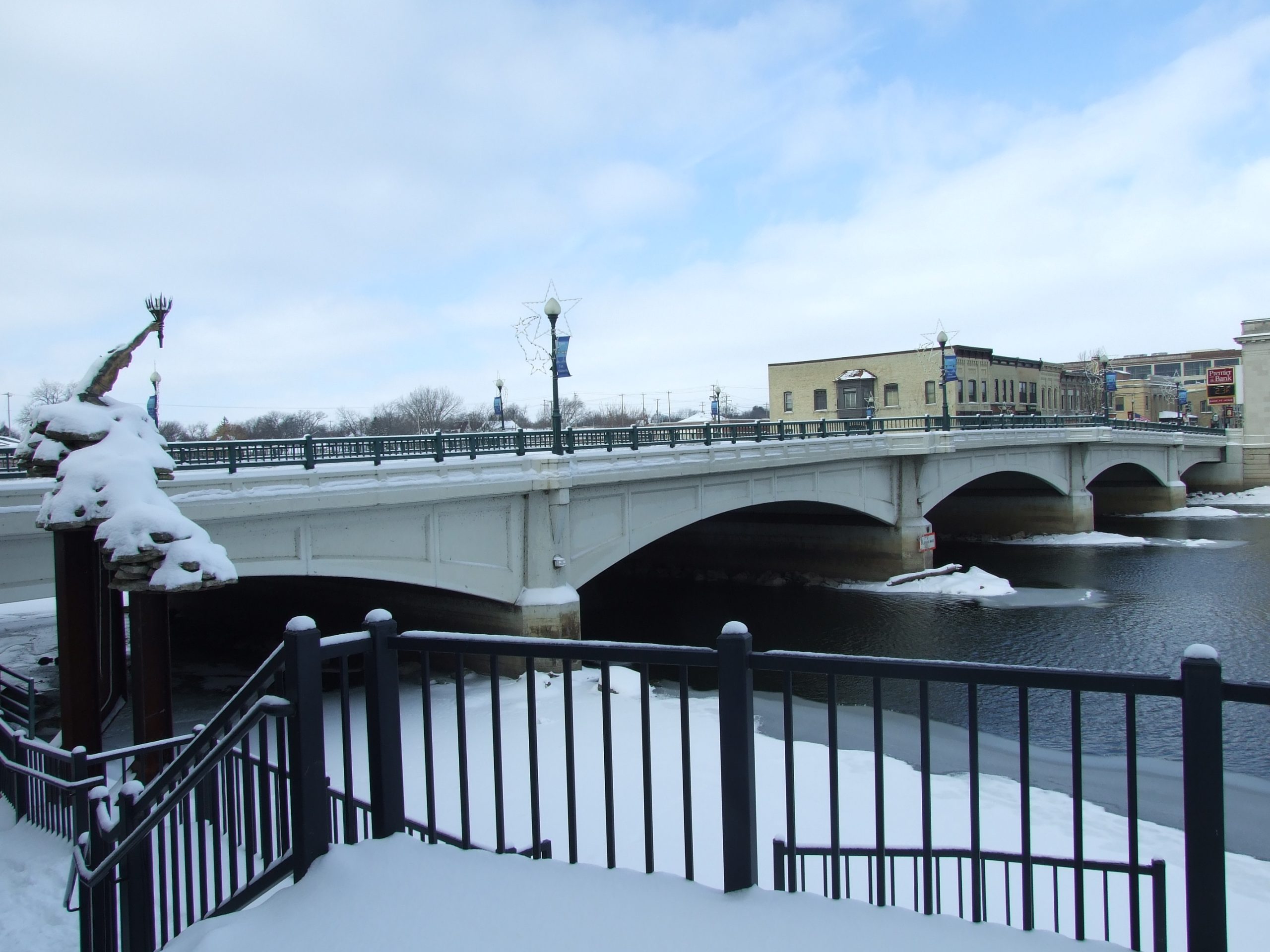
In 1832, during the Black Hawk War, General Henry Atkinson’s forces built a stockade on the Rock River and called it Fort Koshkonong. The war ended, the fort came down, and the settlement that grew on the site took the general’s name instead. Today it is the largest city entirely inside Jefferson County, at 12,579 people — bigger than the county seat at Jefferson, and big enough to support its own hospital, its own historic districts along Main Street and Merchants Avenue, and a genuine downtown.
Two things here are genuinely unusual. The first is that Fort Atkinson has been a publishing town for a hundred and forty years: William Dempster Hoard founded Hoard’s Dairyman here in 1885, it went on to be read across the country, and Hoard himself became governor of Wisconsin in 1889. The magazine still operates. The second is the Panther Intaglio — a 125-foot effigy figure cut into the ground rather than mounded up, and the last surviving intaglio of its kind in the state.
For roofing purposes, though, the defining fact is the weather, and it is not what people expect. The National Weather Service database records 43 severe events at Fort Atkinson since 2005, which is more than any other town we cover. But only 13 of those are hail. 31 are straight-line wind and eight are tornadoes.
On the evening of August 18, 2005, five separate tornadoes touched down in or around Fort Atkinson inside about half an hour — the first at 6:15 p.m. five and a half miles west of town near the end of West Grove Road, the last at 6:45 p.m. three miles southeast, where it uprooted trees and tore apart a corn bin. In June 2010 an 81 mile an hour gust took down trees across the southwest side. In July 2010 an EF0 developed near Highway 26 and the Rock-Jefferson county line. That is a different risk profile from Lake Mills or Oconomowoc, and it calls for different attention: nailing patterns, edge and rake detail, ridge attachment, and flashing that is fastened rather than relying on sealant.
The housing stock reinforces it. The older neighborhoods along the river are pre-war two-stories and Victorians — steep, cut up, and originally built for slate or shake before being re-covered in asphalt. Steep sheds water beautifully and catches wind badly. South of town the Lake Koshkonong properties add open-water exposure on top. And downtown floods from the Rock River periodically, which is a reminder that on a river town the gutters and the drainage matter as much as the shingles.
Storm History
Five Tornadoes In One Evening
A record weighted heavily toward wind rather than hail, which changes what to look for on a roof here.
44 recorded storms since 2005 · largest hail 1.75″ · strongest gust 81 mph · 8 tornadoes · NOAA
-
June 10, 2026
Straight-line wind
Full record →An intense complex of thunderstorms tracked across most of southern Wisconsin, northern Illinois, and portions of northeast Wisconsin during the afternoon hours on June 10, 2026. Multiple measured wind gusts of 70+ MPH were reported as the storms moved across southern Wisconsin, resulting in widespread tree & power line damage. Several areas of structural damage…
-
April 18, 2025
Hail
Full record →A cluster of severe thunderstorms with very large hail and heavy rain tracked along a warm front over southern WI during the morning. Numerous reports of very large hail were received, and also flash flooding in Milwaukee.
-
June 3, 2024
Straight-line wind
Full record →A slow moving warm front brought multiple rounds of strong to severe thunderstorms and heavy rainfall from late morning on June 3rd into the early morning hours of June 4th. Areas of flooding did occur along with some wind damage.
-
May 26, 2024
Tornado
Full record →On a Memorial Day Weekend-Sunday, a line of storms looped up into southern Wisconsin in the late afternoon/early evening hours and produced 3 long track but weak tornadoes across Rock and Jefferson counties. These tornadoes were well documented via storm chasers and spotters along their lifetime. One of the tornadoes went through the north side…
-
August 24, 2023
Straight-line wind
Full record →Scattered strong to severe thunderstorms occurred along a passing area of low pressure and its cold front over southeast Wisconsin. Large hail and wind damage to trees was observed.
-
July 28, 2023
Straight-line wind
Full record →Multiple periods of thunderstorms came through southern Wisconsin due to the passage of low pressure. Mainly widespread wind damage was noted from the multiple rounds of storms, but some significant hail was observed and one tornado.
Permits
Do You Need A Roofing Permit In Fort Atkinson?
Yes. The City of Fort Atkinson requires a permit to re-roof — City of Fort Atkinson — Permit FAQs: “Replacement of roof structure: Yes · Reshingle or leak repair: Reshingle – Yes, Leak repair – No · Replacement of siding Yes” We pull it before the crew arrives and it is a line item on your estimate rather than a surprise; a permit pulled by the homeowner makes the homeowner responsible for code compliance on somebody else’s work. A leak repair alone needs none.
Questions go to Neighborhood and Building Services on (920) 397-9901. The answer differs town to town because SPS 320.09(2)(b) leaves permits for alterations and repairs to local ordinance.
What To Look For
Wind Damage Is Visible, Which Is The Good News
Unlike hail, wind leaves evidence you can see from your own yard. Shingles lift, crease across the middle, and either tear away or settle back down looking almost normal. A creased shingle has broken its seal and its mat, and it will pass water while still being nailed to your roof.
Where it starts is predictable: ridges and hips first, then the rakes and eaves, then anything around a chimney or dormer where turbulence lifts the courses beside it. Previously patched areas that were face-nailed rather than properly sealed go before the original shingles do.

Water Management
A River Town: Gutters Matter As Much As Shingles
Fort Atkinson floods. Not catastrophically and not often, but the Rock River backs up into the downtown periodically, and living in a river town changes what you should worry about on a building.
The point people miss is that a roof’s job does not end at the shingles. It ends wherever the water is finally put down, and on an older Fort Atkinson house that is frequently the wrong place: a gutter undersized for the roof it serves, one downspout doing the work of two, and the outlet discharging three feet from a hundred-year-old fieldstone foundation. In a town that already has a high water table after a wet spring, that is how you get a wet basement and blame the wrong trade.
So on a house here we look at the whole path. Is the gutter five inch or six, and is that right for the pitch and area feeding it? Are there enough downspouts, and are they at the low points? Is the fascia sound enough to carry hidden hangers, or has spike-and-ferrule gutter already worked it loose? And where does the water actually end up — extensions, a buried drain, or a splash block six inches from the wall?
The wind history makes it more pressing rather than less. This is the most wind-exposed town we cover, and a gutter that is only just attached is the first thing to come off in an eighty mile an hour gust — which then takes fascia and soffit with it, and turns a gutter job into a carpentry job.
None of that is expensive to get right at the same time as a roof. All of it is expensive to fix separately afterward.
Local Reviews
Reviews From Fort Atkinson
“They looked at the roof, told me it had another five or six years in it, and did not try to sell me a replacement. I will call them when it is actually time.”
Straight Answers
Fort Atkinson Roofing Questions
Eight recorded in the National Weather Service database at or near Fort Atkinson since 2005, including five in a single evening on August 18, 2005. It is the most tornado-prone location in our service area by a wide margin, and it is the reason we pay closer attention to fastening and edge detail on roofs here.
Almost always. The questions worth asking are about the decking and the ventilation rather than the shingle. Older sheathing is often board rather than plywood, which is fine if it is sound but needs checking for spread and rot, and a house built before attic ventilation was understood usually needs intake added at the same time.
Usually not. Chimney flashing is the single most common leak on an otherwise sound older roof, and it is a repair rather than a replacement if the surrounding shingles have life left. We would rather sell you the repair and be honest about how long the rest has.
In exposure, yes. Open water means sustained wind loading, and lakefront roofs of the same age and material as an in-town house are consistently further along. Nailing pattern and edge detail matter more there.
Frequently not. A shingle that lifted and settled can still be creased, and a crease is a break in the mat. That is exactly the damage that shows on an inspection and never from the street — and in a town with this much wind history, it is worth checking after any significant blow.
It changes the fastening rather than the shingle. A higher wind-rated product, a six-nail pattern, proper starter course at the rakes and edge metal at closer centers. None of that will save a roof from a direct hit, and all of it matters in the eighty mile an hour gusts this town gets regularly.
Often part of the same claim, yes. Gutters, fascia and soffit are frequently damaged by the same wind event that lifted the shingles, and on a river town where drainage matters they should not be left off the scope. We photograph them as a matter of course.
Free Inspection
Wind Damage in Fort Atkinson?
Free inspection, photographs of every slope, and a straight answer about whether it is claimable.