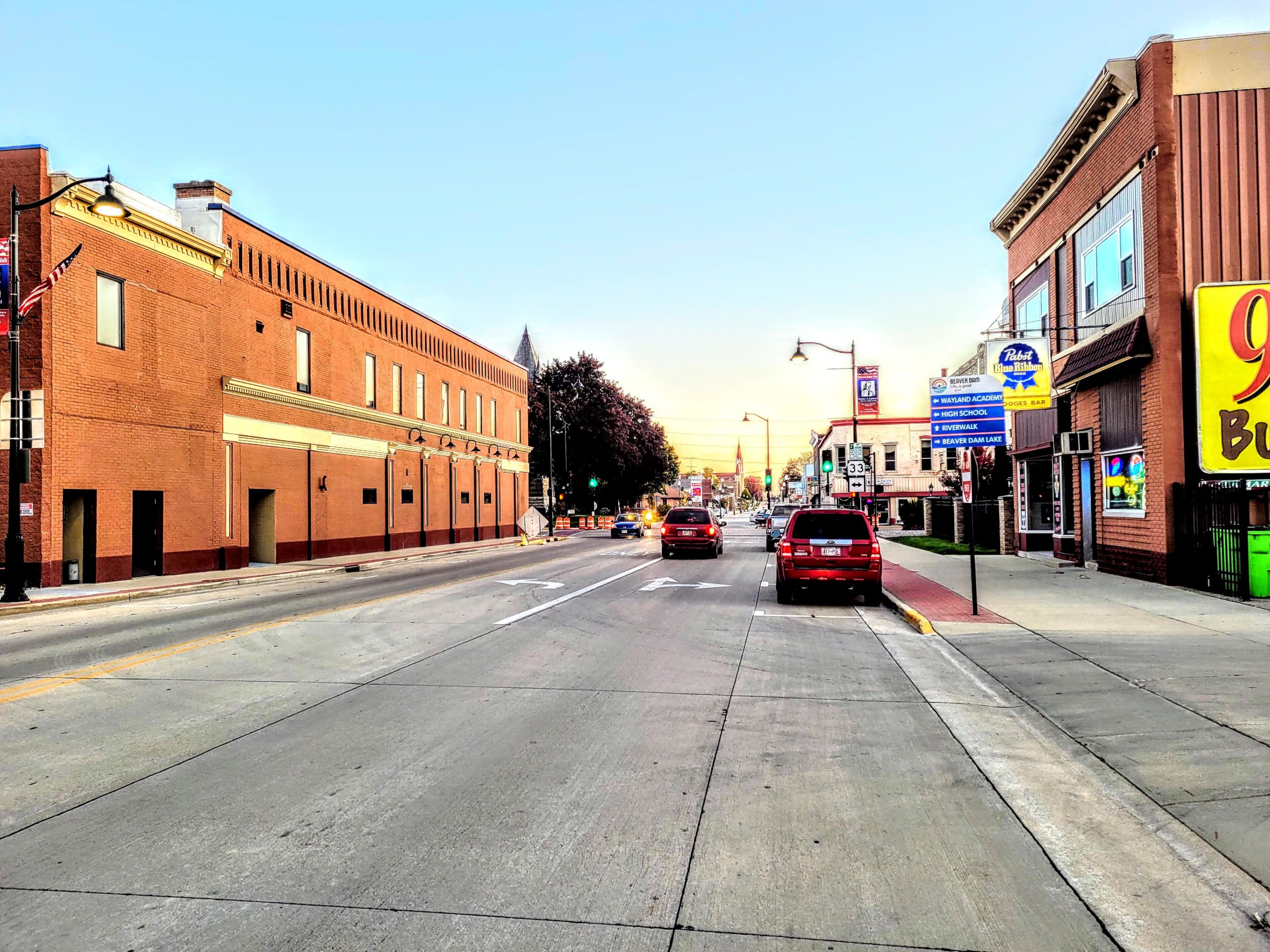
Beaver Dam · Dodge County
Roofing in Beaver Dam, Wisconsin
Twenty miles north, the largest city in Dodge County, and 34 recorded severe storms since 2005. A roofer twenty miles south.
Beaver Dam
Named For An Actual Beaver Dam, And Still Shaped By The Water
Thomas Mackie and Joseph Goetschius settled here in 1841, and by 1843 there were about a hundred people. The name is not a flourish: it is a translation. The Ho-Chunk and Chippewa knew the place as Okwaanim, meaning beaver dam, after a real dam across the stream feeding what is now the Beaver Dam River. The city incorporated on March 18, 1856, the Milwaukee Railroad arrived the same year, and it grew from there into the largest city in Dodge County at 16,708 people.
There is one piece of history here that most residents do not know. In the summer of 1944, Camp Beaver Dam held around three hundred German prisoners of war in a tent city on the ground where Wayland Academy’s field house now stands. They worked the canneries and the farms through the harvest. It is a strange thing to picture on a walk across that campus.
The weather record here is about wind as much as hail. The National Weather Service database lists 34 severe events at Beaver Dam since 2005 — 13 hail and 20 straight-line wind. The largest stones on record are 1.75 inch, on June 12, 2008, with a 1.5 inch event in April 2014. That is a meaningfully different profile from Oconomowoc, where the hail is bigger and more frequent, or Fort Atkinson, where the tornadoes are.
What it means practically is that Beaver Dam roofs tend to fail at the edges rather than across the field. Wind gets under a rake or lifts a ridge, the seal strip lets go along a course, and water finds its way in at a specific point rather than degrading the whole slope at once. Those are frequently repairs rather than replacements, and we would rather sell you the repair.
The housing splits around the water. Substantial older stock sits near the lake and the downtown — late nineteenth and early twentieth century, steeper, more detailed, more valley. Then post-war and 1970s subdivisions spread south and west, and a large share of that later stock went on architectural shingle in the late nineties and early two-thousands. That puts it at twenty to twenty-five years old right now, which is precisely the age where a hail season it technically survived turns out to be the thing that finishes it early. Lake-adjacent properties get more wind than their inland neighbors, and it shows up first as ridge cap loss and lifted shingles along the exposed rake.
Storm History
Dodge County’s Severe Weather Record
Hail, straight-line wind, and one tornado — the whole Dodge County repertoire.
35 recorded storms since 2005 · largest hail 1.75″ · strongest gust 72 mph · 1 tornado · NOAA
-
June 10, 2026
Straight-line wind
Full record →An intense complex of thunderstorms tracked across most of southern Wisconsin, northern Illinois, and portions of northeast Wisconsin during the afternoon hours on June 10, 2026. Multiple measured wind gusts of 70+ MPH were reported as the storms moved across southern Wisconsin, resulting in widespread tree & power line damage. Several areas of structural damage…
-
August 16, 2025
Straight-line wind
Full record →An upper level disturbance and nearby stationary front led to multiple rounds of severe thunderstorms across southern WI. Large hail and damaging straight line winds led to trees down and some structural damage.
-
July 16, 2025
Tornado
Full record →Two lines of severe thunderstorms tracked across southern Wisconsin from early afternoon through the early evening hours. Numerous supercell thunderstorms developed, producing a number of wall and funnel clouds as well as a few tornadoes. A secondary line of storms came through which caused sporadic wind damage. The main damage was in Iowa county from…
-
May 15, 2025
Hail
Full record →One of the bigger tornado events for southern WI over the past 10-15 years with 2 EF-2s occurring and 8 tornadoes in total. Juneau and Mayville took the brunt of the two strong tornadoes, while hundreds of large hail reports and several damaging wind reports were received across southern WI. A strong cold front, extending…
-
May 21, 2024
Straight-line wind
Full record →Lines and clusters of severe thunderstorms moved across southern WI from the late morning through the late evening as the passage of a warm front was quickly followed by a cold front. Straight-line winds accounted for fairly widespread tree limb damage especially over south central WI. Several reports of large hail were received while street…
-
April 27, 2024
Hail
Full record →Strong to severe thunderstorms developed along and near a stationary front. Some of the storms produced large hail.
Permits
Do You Need A Roofing Permit In Beaver Dam?
No. The City of Beaver Dam publishes that a re-roof needs no permit: “Permits are not required for siding, replacing windows or doors that are the same size, or residential re-roofing. (if changing the pitch or replacing trusses, a building permit is required.)” — City of Beaver Dam — Inspection Services. Change the pitch or replace trusses and that becomes a building permit. Siding is exempt on the same list, and same-size windows and doors too. We check the parcel before quoting, because a mailing address does not tell you which jurisdiction you are in.
No permit does not mean no rules: SPS 320.04(2) makes the work comply with the state code whether or not anyone inspects it. If a quote carries a permit line for a straight re-roof here, ask to see the permit. Anything unusual — a change of pitch, structural work, a dumpster in the street — is a phone call to Inspection Services on (920) 887-4600.
The Common Case
A Twenty-Five Year Old Roof That Survived A Hail Season
This is the most common situation we find in Beaver Dam. A roof from around 2000 that took hail somewhere along the way, never leaked, never got claimed, and is now being asked to do its last few years with a cracked mat under the granules.
There is no claim available for a storm that far back. What there is, is a decision to make with real information rather than guessing — whether you have three years or one, and whether it is worth budgeting for next spring rather than reacting to a leak in February.
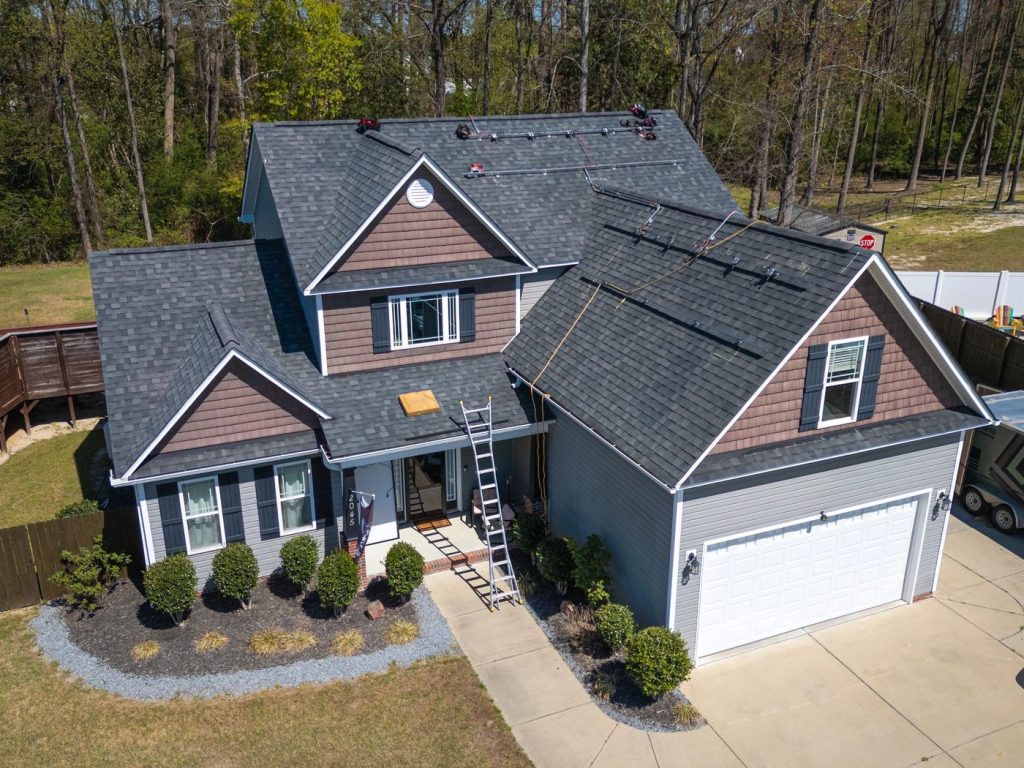
A Whole Cohort At Once
The 1998 To 2005 Roofing Cohort, And Why It Is All Failing Together
A large share of Beaver Dam’s housing went up in the subdivisions spreading south and west between roughly the late nineties and the mid two-thousands. Those houses got architectural shingle — a genuine improvement on the three-tab that came before it — with a printed warranty of thirty years or more.
They are now twenty to twenty-five years old, and a lot of them are not going to make thirty. That is worth understanding without cynicism, because the reasons are specific.
The warranty was never a service life. A thirty-year rating is a manufacturing defect warranty, prorated, on materials only, under ideal installation and ventilation. It was never a promise that the roof would perform for thirty years on your house.
Ventilation in that era was inconsistent. Ridge vent became standard on new construction faster than adequate soffit intake did, and a ridge vent without intake actively shortens shingle life. We check the attic on every inspection here because it is the most common single explanation for a Beaver Dam roof looking a decade older than its paperwork.
And most of them have been through hail. Dodge County has recorded plenty of it since 2005. A roof that took a bruising at year twelve did not leak and did not get claimed, but the mat under the granules was cracked and the clock sped up from that point.
The practical upshot is that if your house is from that window, this is a good year to find out where you stand rather than a good year to assume you have five more. An inspection is free and the answer is frequently better than people fear — but it is an answer rather than a guess, and it lets you budget for a spring replacement instead of reacting to a February leak.
Straight Answers
Beaver Dam Roofing Questions
Regularly. Twenty miles, comfortably inside the radius we will service a warranty across. That is the number worth asking any contractor about — not whether they will drive out to sell you a roof, but whether they will drive out in four years to look at a drip.
Yes, and newer roofs are the ones most often missed. Hail cracks the mat under the granules regardless of the shingle’s age. A young roof with bruising will not leak for years — it will simply reach the end of its life a decade early, long after anyone would have paid for it.
That is one of the more reliable signs there is. Aluminum gutter dents from hail that only bruises a shingle, so dimpled gutters mean the roof took the same hits without showing them from the ground.
In Beaver Dam, more often a repair than people expect. The damage profile here is wind-driven and tends to be local — a rake, a ridge, one slope — rather than hail bruising spread across every elevation. If the roof is sound and the damage is in one place, we will tell you that.
If it is outside your policy’s reporting window, no — and we will tell you that rather than help you file something that gets denied and sits on your loss history. What it is worth is knowing the roof carries that damage, because it changes when you should budget for a replacement.
Yes. Beaver Dam Lake frontage gets noticeably more wind than an inland house on the same street plan, and it shows up at the ridge and the rake first. Same specification advice as any exposed site: higher wind rating and a six-nail pattern.
Free Inspection
Beaver Dam Roof Not Inspected Lately?
Free inspection, and you keep the photographs whether or not you file anything.