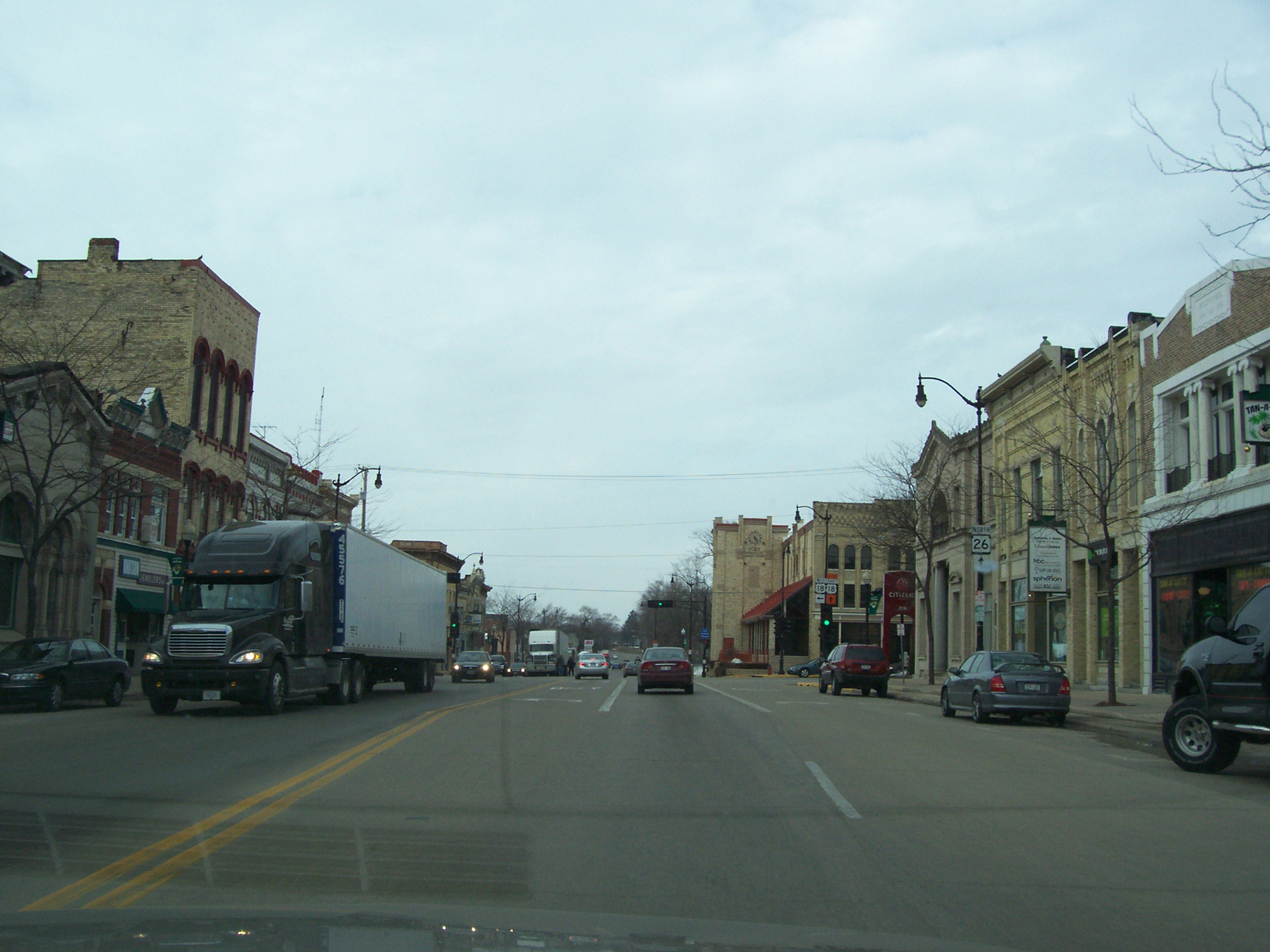
Jefferson · Jefferson County
Roofing in Jefferson, Wisconsin
Nine miles down the road, where the Rock and the Crawfish meet — and where a 4.25 inch hailstone landed in 2011. A roofer nine miles away, not ninety.
Jefferson
Two Rivers, A Steamboat Terminus, And The Storms That Follow The Valley
On December 18, 1836 three men came out from Milwaukee — Rodney Currier, Andrew Lansing and Captain Robert Masters — and put up a log cabin at the point where the Crawfish runs into the Rock. Jefferson was a village by 1857 and a city by 1878, and for a while it was genuinely important: in 1839 this was the furthest point up the Rock River a steamboat could navigate, which made it the head of navigation for everything moving through the interior.
That confluence is still the defining fact about the place, and it is why the weather here behaves differently from Watertown nine miles north. Two river valleys meet, and they funnel storms. The practical effect is that severe weather in Jefferson arrives in narrow bands rather than broad fronts — one side of town gets hit hard and the other barely knows it happened.
That single characteristic causes more bad roofing decisions here than anything else. “My neighbor got a new roof” is a much weaker signal in Jefferson than it would be in a town that gets covered evenly, and it cuts both ways. Plenty of people talk themselves out of an inspection because the next street was untouched. Plenty of others assume they must be damaged because the next street was not.
The record shows how hard it can get. On May 11, 2011 a 4.25 inch hailstone was recorded at Jefferson — that is grapefruit, and it is within a quarter inch of the largest ever measured anywhere in Wisconsin. Six years earlier, on June 4, 2005, straight-line winds estimated at 75 miles an hour tore a twenty foot by twenty foot section off the roof of Jefferson High School. Those are not general claims about Wisconsin weather. They happened here, to buildings you can drive past.
The housing splits cleanly. Around the square there is solid older stock, much of it late nineteenth and early twentieth century, with steep pitches and a lot of valley — the roofs where the flashing and the valley metal decide whether the job lasts. Out toward the edges it is post-war and newer subdivision, simpler and quicker. And the town still runs on real industry: Generac, Purina and Valero all have operations here, and Gemütlichkeit Days has been celebrating the German heritage every year since 1971.
Storm History
What Has Actually Hit This Town
The record includes the straight-line wind that took a twenty-by-twenty-foot section off the roof of Jefferson High School. Newest first; each entry opens the full storm.
13 recorded storms since 2005 · largest hail 4.25″ · strongest gust 75 mph · NOAA
-
August 24, 2023
Straight-line wind
Full record →Scattered strong to severe thunderstorms occurred along a passing area of low pressure and its cold front over southeast Wisconsin. Large hail and wind damage to trees was observed.
-
June 13, 2022
Hail
Full record →A supercell thunderstorm formed north of a warm front and tracked east across much of southern WI. A swath of destructive hail and sporadic wind damage occurred. More specifically, vehicle, shingle, siding, gutter, and window screen damage. Short segments of tree damage also occurred. Three people drowned in Milwaukee when two men attempted to help…
-
August 26, 2018
Straight-line wind
Full record →Multiple rounds of strong to severe thunderstorms moved across southern WI as a warm front slowly moved north through the region. Flash flooding occurred in Washington, Ozaukee, and northern Milwaukee Counties which was followed by prolonged river flooding. Four to eight inches of rain had fallen over this area. The thunderstorms produced sporadic tree and…
-
July 15, 2017
Straight-line wind
Full record →A west to east line of thunderstorms slowly moved south across southern WI during the evening hours as a cold front passed. The thunderstorms produced sporadic wind damage and large hail.
-
April 10, 2017
Hail
Full record →A low pressure area and warm and cold frontal passages brought a round of thunderstorms in the early morning and another round in the afternoon. Large hail was observed.
-
July 5, 2016
Straight-line wind
Full record →A severe squall line moved across southern Wisconsin from late evening on July 5th to the early morning hours on July 6th as a cold front approached. Tree damage from straight line winds was the main result.
Permits
Do You Need A Roofing Permit In Jefferson?
The City of Jefferson publishes no rule for re-roofing, so the honest answer is to ask before anything is signed: the building inspector — the city contracts inspection to General Engineering Company (GEC) on (920) 674-7727, or the inspector direct on (608) 697-7776 — City of Jefferson — Building Inspection. We make that call as part of the estimate, and if a permit is needed it is ours to pull and a line item on your price. The published wording: “If you are building new or making addition or remodeling changes, repairs or alterations to any structure … a building permit is required before you begin.”
The answer differs town to town because SPS 320.09(2)(b) leaves permits for alterations and repairs to local ordinance. No permit does not mean no rules: SPS 320.04(2) makes the work comply with the state code whether or not anyone inspects it.
Why Inspections Matter Here
Narrow Hail Bands Mean You Have To Look
Because the river valleys concentrate the weather, damage in Jefferson is patchy in a way that defeats guesswork from the driveway. Two streets is a real difference here.
So the only useful answer to “was I hit” is somebody on the roof with a hand on the shingles. From nine miles away that is not a large ask, and it costs nothing.
It matters for the claim as well as for the roof. An adjuster working a regional storm arrives with an expectation about what the weather did across the county, and a narrow band means your address may not fit that expectation. Marked, measured, photographed damage on every slope is what closes that gap, and it is the reason we would rather be up there when they are.
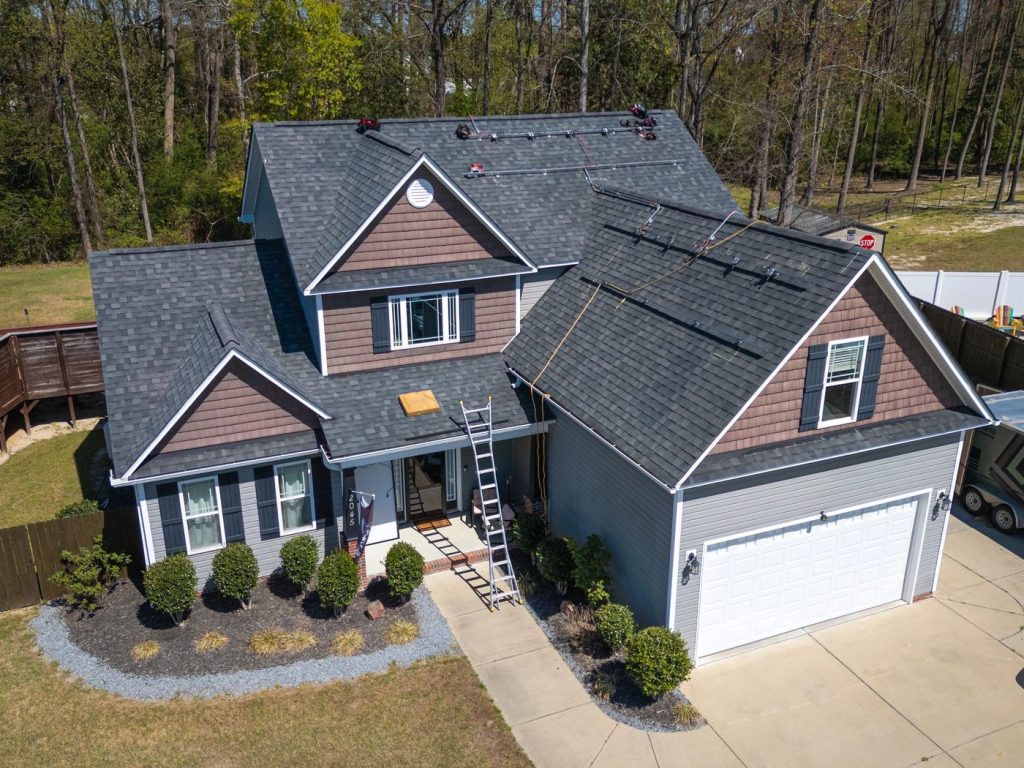
Pricing Older Homes
Older Houses, Real Industry, And Two Different Kinds Of Job
Jefferson supports a genuine industrial base for a town of under eight thousand — Generac, Purina and Valero Renewables all operate here — and that shapes the building stock in a way that matters when you are pricing work.
On the residential side, the split is stark. Around the square and along the rivers there are late nineteenth and early twentieth century houses with steep pitches, cross-gables and a great deal of valley. Those are roofs where the labor is concentrated in the details: valley metal, step flashing at every wall, chimney work, and the ridge. The field of the roof is the quick part. Out toward the edges of town the post-war and newer subdivisions are simple, walkable and often a single day.
The mistake people make is comparing quotes across those two categories as though a square is a square. It is not. A 2,000 square foot footprint on a steep cut-up Victorian can carry half again the roof area of the same footprint on a ranch, plus eight or ten flashing details that each take a roofer time to do properly.
What to ask any quote for, on an older Jefferson house: how many squares it is priced on and how that was measured; how many linear feet of valley, and whether the valleys are getting metal or being woven with shingle; whether the step flashing is new or reused; and what happens to the price if the board decking underneath turns out to be soft. Those four answers will explain almost any gap between three estimates.
And because the weather here comes in narrow bands off the river valleys, the same house on the same street can have a completely different damage history from its neighbor. We photograph every slope so that conversation is about evidence rather than opinion.
Local Reviews
Reviews From Jefferson
“Full tear-off on a house built in 1961, so there were surprises under the old shingles. They called me before doing anything extra and the final invoice matched the estimate. Yard was cleaner when they left than when they showed up.”
Straight Answers
Jefferson Roofing Questions
Genuinely possible. The Rock and Crawfish valleys funnel storms through Jefferson in narrow bands, so a two-street difference is real rather than an excuse. It is also the exact situation where people wrongly decide not to bother. The inspection is free and takes half an hour.
On May 11, 2011, recorded in the National Weather Service database.Hail that size does structural damage, not cosmetic.
Nine miles, so the same day in almost all circumstances and the same evening if you catch us before the crew stands down. We tarp it, then do the permanent repair once it is dry and the claim is settled.
Usually, for two reasons: a steep pitch has far more surface than its footprint suggests, and there is more detail work at the valleys and walls. We measure the roof plane rather than the floor area, which is why our number often differs from one given over the phone.
Light commercial, yes — the sort of low-slope and steep-slope work a small industrial or retail building needs. What we do not do is large single-ply membrane roofs on the big plants, and we will tell you that rather than take on something outside what we are good at.
It makes documentation matter more. When your street was hit and the next one was not, an adjuster arriving with a regional view of the storm may not expect to find damage at your address. Photographs of marked, measured bruising on every slope is what settles that, and it is why we would rather be on the roof when they are.
Free Inspection
Jefferson Roof Need Looking At?
Nine miles away. Free inspection, written report, photographs of every slope.