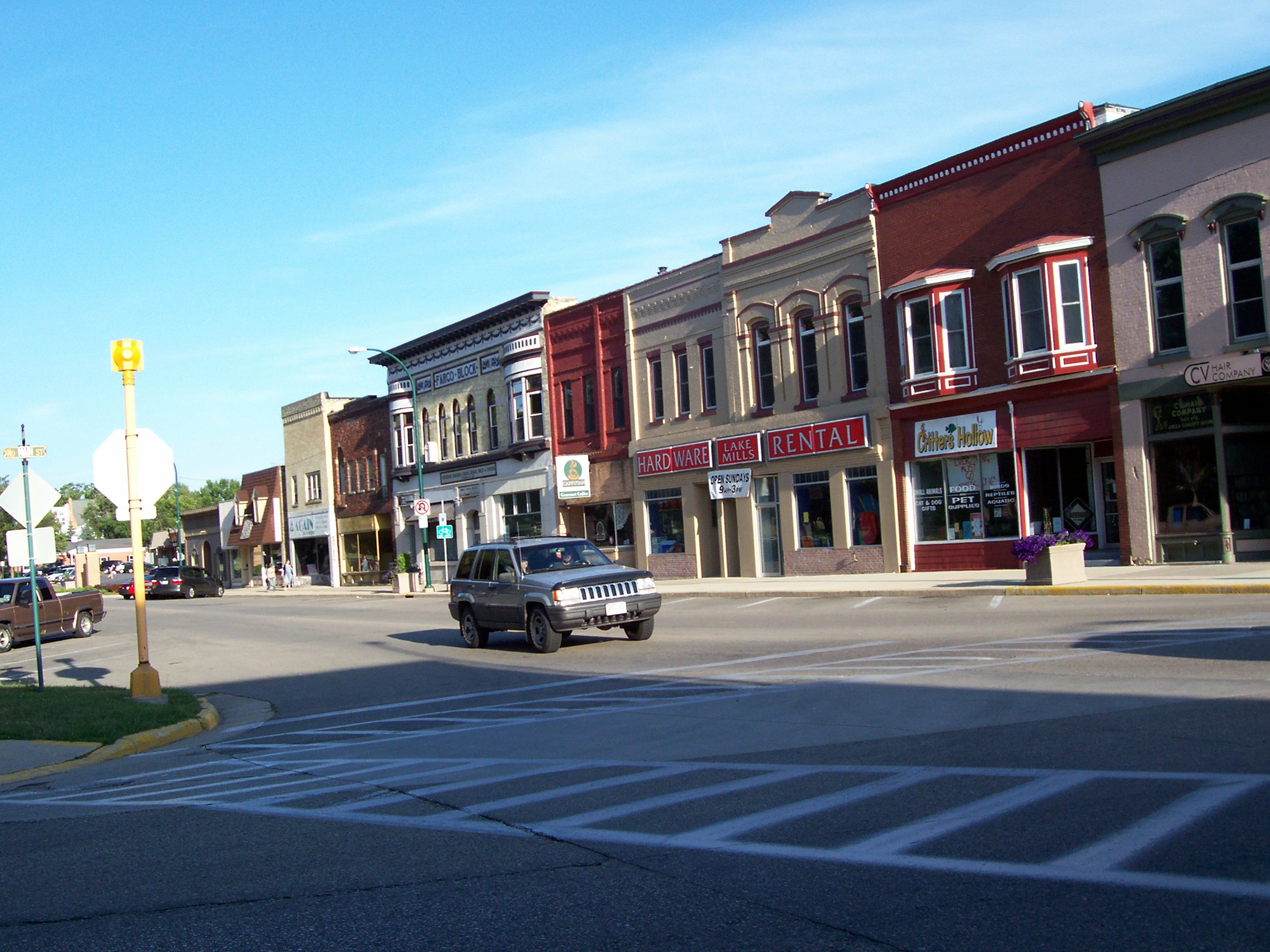
Lake Mills · Jefferson County
Roofing in Lake Mills, Wisconsin
Where Wisconsin’s near-record hailstone landed. Three miles northwest of here, April 13, 2006, four and a quarter inches. Your roofer is fifteen miles east.
Lake Mills
The Town That Changed Its Name, Next To The Town That Vanished
Captain Joseph Keyes built a saw mill and a grist mill on the outlet of Rock Lake and called the place Lake Mills, which is about as literal as a name gets. It was a village by 1852. Then in 1866 the residents decided Tyranena was better — said to mean sparkling waters — renamed the whole town, and changed their minds again the following year. It has been Lake Mills since 1867, and the old name survives on a brewery and a park.
Three miles east is Aztalan, which is a genuinely extraordinary thing to have on your doorstep: a fortified Mississippian settlement occupied around a thousand years ago, with earthen pyramids and a stockade, and one of the most important archaeological sites in the Midwest. And out in Rock Lake itself there is the persistent local claim of submerged stone pyramids, which divers have been arguing about since the 1930s. Whatever is or is not down there, it tells you something about a town that renamed itself twice in two years.
What Lake Mills is known for in our trade is the hail. At 9:55 in the evening on April 13, 2006, a State Trooper measured a hailstone 4.25 inches across three miles northwest of here, at the intersection of Newville Road and Interstate 94.That storm ran from about 8:40 to 11:00 that night and left reports of damaged vehicles, broken windows, wrecked vinyl and aluminum siding and caved-in pole sheds right across the corridor.
It was not a one-time event. The database records 29 severe events at Lake Mills since 2005, including two tornadoes and a 75 mile an hour wind event in August 2010 that police reported as considerable tree damage. The town sits with open farmland to the west and a large body of water on its eastern edge, which is a combination that produces both.
The housing follows the lake. Rock Lake shoreline property takes sustained wind loading that nothing inland experiences, and we consistently inspect fifteen-year-old lakefront roofs that are further along than twenty-year-old roofs a mile inshore. Then there is a growing band of newer construction out toward the interstate, where the roofs are young on paper. For a lakefront or west-facing house, the age on the paperwork is a poor guide to the condition of the roof.
Storm History
The 2006 Hailstone, And What Came After
Two tornadoes, and the 4.25 inch stone of April 13, 2006 that remains the largest recorded anywhere in Jefferson County.
29 recorded storms since 2005 · largest hail 4.25″ · strongest gust 75 mph · 2 tornadoes · NOAA
-
April 14, 2026
Hail
Full record →Numerous severe thunderstorms developed across southern Wisconsin during the afternoon and evening hours as a wave of low pressure moved across a stationary front over the region. Two main supercell thunderstorms developed along and north of Interstate 94 between Madison and Milwaukee, which produced softball sized hail and an EF-2 tornado. These storms would later…
-
April 18, 2025
Hail
Full record →A cluster of severe thunderstorms with very large hail and heavy rain tracked along a warm front over southern WI during the morning. Numerous reports of very large hail were received, and also flash flooding in Milwaukee.
-
October 12, 2022
Tornado
Full record →A cold front moving through southern Wisconsin was the focus for tornadic development through the lunch hour. Temperatures and dew points rose enough in the late morning to help fuel the strengthening of the rain along the front. There were numerous tornadic debris signatures that developed, many of which appeared to be extremely brief which…
-
September 25, 2022
Straight-line wind
Full record →A weak cold front and strong upper level disturbance brought a line of strong to severe thunderstorms across southern WI for the late afternoon and early evening hours. Tree damage from straight-line winds was the most prevalent.
-
June 13, 2022
Straight-line wind
Full record →A supercell thunderstorm formed north of a warm front and tracked east across much of southern WI. A swath of destructive hail and sporadic wind damage occurred. More specifically, vehicle, shingle, siding, gutter, and window screen damage. Short segments of tree damage also occurred. Three people drowned in Milwaukee when two men attempted to help…
-
August 6, 2021
Hail
Full record →Several severe thunderstorms impacted portions of southern Wisconsin, especially near Lake Michigan as storms developed across central Wisconsin and eventually morphed into a line that dropped south into Illinois.
Permits
Do You Need A Roofing Permit In Lake Mills?
The City of Lake Mills publishes no rule for re-roofing, so the honest answer is to ask before anything is signed: Building Inspector / Zoning Administrator, Troy Evenson on (920) 648-2344 — City of Lake Mills Permit Center (ZoningHub). We make that call as part of the estimate, and if a permit is needed it is ours to pull and a line item on your price. The Town of Lake Mills is separate and contracts inspection to MSA Professional Services.
The answer differs town to town because SPS 320.09(2)(b) leaves permits for alterations and repairs to local ordinance. No permit does not mean no rules: SPS 320.04(2) makes the work comply with the state code whether or not anyone inspects it.
Rock Lake Exposure
Lakefront Roofs Need A Different Specification
Not necessarily a different shingle, but a different spec: a higher wind-rated product, a six-nail pattern rather than four, and proper starter and edge detail at the rake. It costs a little more, and it is the difference between a roof that shrugs off a gust event and one that starts peeling at the corner.
The tell after a wind event is the ridge. Ridge cap is the first thing to go, and an exposed ridge is an open seam along the highest line on the house — it will not necessarily leak in dry weather, which is how people leave it for months.

Rock Lake Exposure
Shoreline Versus Inland: The Same Shingle, Different Lifespan
Lake Mills gives us an unusually clean comparison, because the town has genuine lakefront property and genuine inland property within a mile of each other, often built in the same decade with the same materials. The difference in how those roofs age is not subtle.
Open water means sustained loading rather than gusts. A house facing across Rock Lake gets wind that has not been slowed by trees, buildings or terrain, and it gets it consistently rather than occasionally. The effect is cumulative fatigue at the edges: the sealant strip that bonds each shingle course to the one below works loose, the rake and the first course above the eave lift and settle repeatedly, and eventually a course stops being bonded at all. It has not blown off, and it is no longer waterproof.
That is why we specify lakefront roofs differently. A higher wind-rated shingle, a six-nail pattern instead of four, proper starter course at the eaves and rakes rather than cut shingles, and edge metal fastened at closer centers. It is a modest addition to the cost of the job and it roughly matches the roof’s rated wind performance to what the site actually delivers.
The second factor is ice. Wisconsin’s freeze-thaw cycling is hard on any roof, and a shoreline house with a cold, windy exposure and a warm attic is a candidate for ice damming at the eaves. Ice-and-water shield membrane at the eaves and in the valleys is not optional on a house like that — and it is the item most often quietly missing from a cheap quote.
If you are comparing your roof to a friend’s a mile inland and wondering why yours looks older, this is usually the answer, and it is not something you did wrong.
Local Reviews
Reviews From Lake Mills
“Got three quotes. Theirs was not the cheapest but it was the only one that explained what the decking underneath was going to cost if it needed replacing. It did, and the price was what they said it would be.”
Straight Answers
Lake Mills Roofing Questions
Yes. Measured by a State Trooper at 9:55 p.m. on April 13, 2006, three miles northwest of Lake Mills at Newville Road and I-94, and recorded in the National Weather Service summary for that event. It is within a quarter inch of the largest hailstone ever measured in Wisconsin.
A different specification, yes: higher wind rating, a six-nail pattern, and proper edge and starter detail. Open water means sustained loading that an inland house never sees, and it shows up as lifted shingles and lost ridge cap rather than as a leak.
If you are on the shoreline or facing the open ground west of town, that is consistent with what we see. Exposure ages a roof faster than the calendar does, and a fifteen-year lakefront roof is often further along than a twenty-year-old one a mile inland.
Worth an inspection either way. What turns a three-shingle nuisance into a legitimate claim is finding that the seal strip has failed across a whole slope — the shingles are still nailed down but no longer bonded, and no longer waterproof.
Not that affect a normal residential reroof, but if you own a listed or contributing property it is worth checking before you change material or color. We will flag it if your parcel looks like it might apply.
On a shoreline house with a cold windy exposure and a warm attic, yes — that is the classic setup. The fix is air sealing and ventilation in the attic rather than anything on the roof, plus ice-and-water shield at the eaves when the roof is next replaced.
Free Inspection
Lake Mills Roof Not Checked Since 2006?
That storm is long outside any claim window, but the damage does not disappear. Free inspection tells you where you stand.