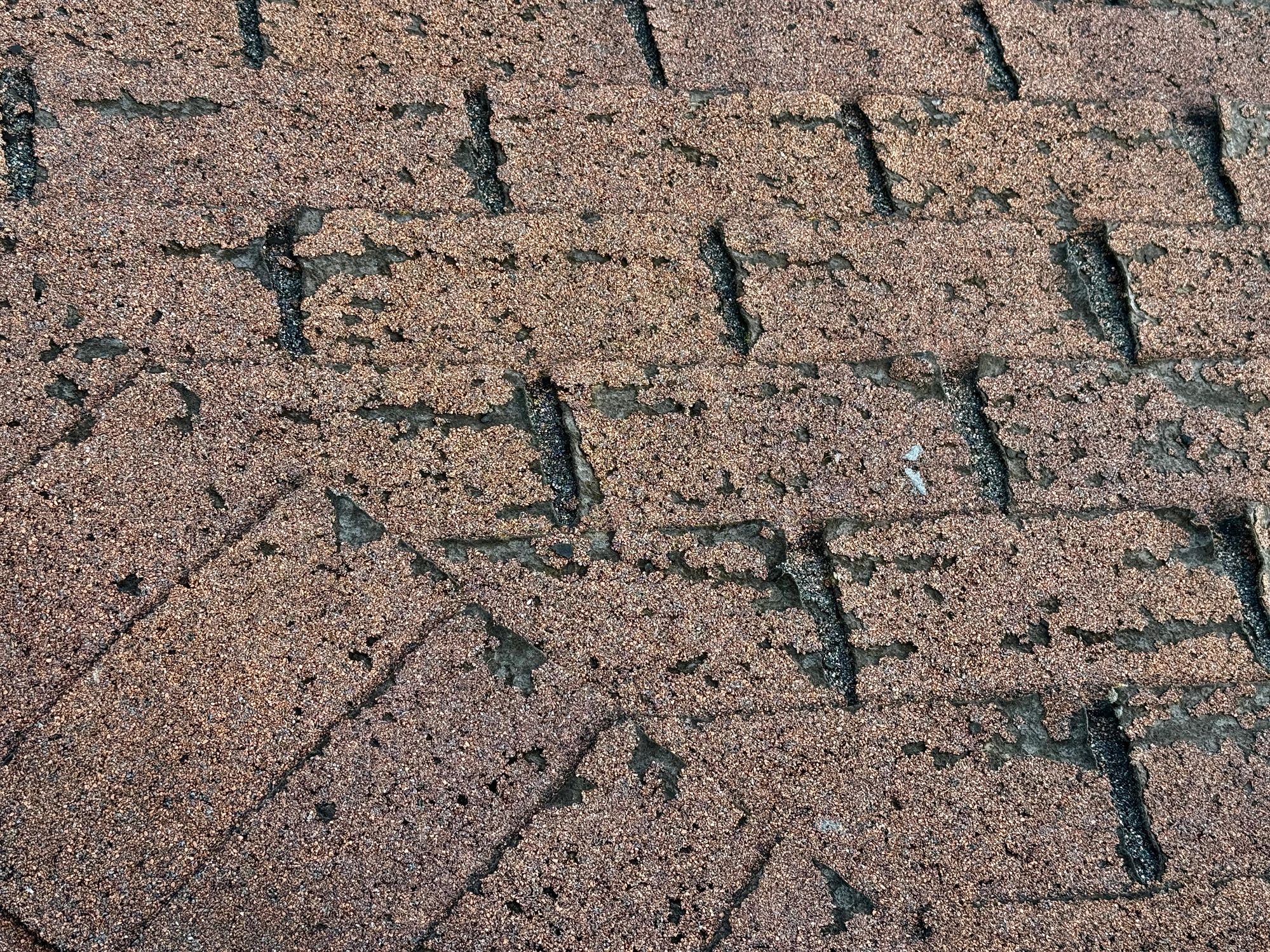
Roofing Permits in Watertown

Local Rules

Roofing Permits in Watertown

The paperwork question every Watertown re-roof raises, answered from the city’s own permit page: the permit you can skip, the one that still trips people up, why the Town of Watertown is a different answer, and what “no permit” does not mean.

The Answer

Do You Need A Building Permit To Replace A Roof In Watertown?

No. The City of Watertown lists roofing and siding under “NO PERMITS ARE REQUIRED FOR”, so a residential tear-off and re-roof inside the city needs no building permit and no inspection. Two things still apply: a right-of-way permit if the dumpster sits in the street, and the city’s own caveat that some codes and restrictions may apply.

That list is the department’s own — Building, Safety & Zoning, “What Requires a Permit?” — and the same page asks you to call before any project to confirm whether a permit is needed: Building, Safety & Zoning on (920) 262-4060, 106 Jones Street, Room 2034. The permits the city does issue run through its online permit portal and are valid for one year from issue; the fee schedule and the application forms are published alongside.

It is worth knowing why the answer is no, because the code does not say so in those words. Watertown’s building ordinance, § 253-11, covers work that is built, repaired, enlarged, altered or moved — which on its face takes in a roof. The exemption is the Building Inspector’s authority to waive a permit for minor repairs:

The Catch

The Permit That Does Trip People Up: A Dumpster In The Street

A tear-off fills a dumpster, and on a lot with a short driveway the dumpster ends up at the curb. The moment it sits in the street it is an obstruction of the public way, and Watertown’s streets ordinance requires a permit for it: a right-of-way permit, issued for fourteen consecutive days, at a fee the Common Council sets under its separate schedule. It is not expensive and it is a phone call. It is also the paperwork most roofing quotes forget.

The contractor pulls it, not you — the dumpster is theirs, and a permit in your name makes you the responsible party if it sits too long or blocks a hydrant. If the quote you are holding has a permit line for the roof itself and nothing for the dumpster, the line is the wrong way round. The application forms and the fee schedule are on the city’s site.
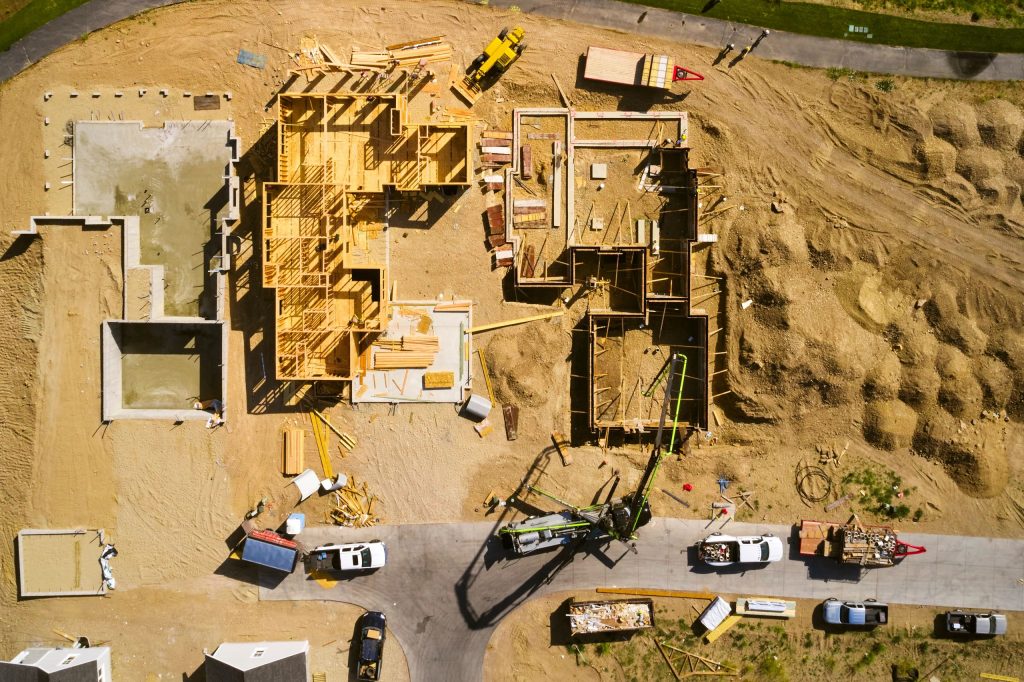
Two Watertowns

The Town Of Watertown Is Not The City Of Watertown

A Watertown mailing address does not mean the City of Watertown. The Town of Watertown surrounds the city, has its own Building Inspector, and runs its zoning through Jefferson County. Its published rule happens to match the city’s — no permit for re-roofing, siding, same-size window and door replacement, or gutters — but the paperwork for anything larger is different, and a county zoning permit comes before any building permit.

The Town’s inspector is John Moosreiner, on (262) 490-0277, at the Town Hall on N8302 High Road on Tuesdays from four to five or by appointment, with no office hours in December, January or February — which matters if a roof fails in a January thaw. Your mailing address will not tell you which side of the line you are on; the parcel record will, and it is the first thing to check before quoting, because getting it wrong stops a job on the morning it starts.

The Code Still Applies

No Permit Does Not Mean No Rules

With no permit there is no inspection, so the only check on a Watertown re-roof is the contract and the contractor. One example is enough to see why that matters: on a roof with a slope of 4:12 or less, SPS 321.28(4) requires an ice barrier membrane at the eaves, and an uninspected roof is where it most often goes missing — invisible once the shingles are on, until the first ice dam finds the nail holes. The replacement page lists every section of the code that governs a re-roof, so a quote can be held against it line by line.

Before You Sign

Your Contractor Has To Tell You Which Permits Apply

In Watertown that means a quote should say plainly that no building permit applies to the roof, and that a right-of-way permit does if the dumpster goes in the street. A quote that carries a permit fee for a city re-roof, or says nothing about the dumpster, has the rule backward, and that is worth asking about before anything else is. If the answer is not straight, the Consumer Protection Bureau takes complaints on 1-800-422-7128.

Elsewhere

Outside The City, The Answer Changes

Fort Atkinson, seventeen miles down the road, requires a permit to reshingle. Some towns publish that they do not; several publish nothing about roofing at all, and there the only honest answer is a call to the building department before anything is signed. Every town we serve has its own rule on its own page, and the service-area hub puts all sixteen side by side with the number to call for each.

Straight Answers

Watertown Roofing Permit Questions

Not for siding: it sits beside roofing on the city’s list of work that needs no permit. Gutters are not named on the city’s list either way, which is exactly the case the department has in mind when it asks you to call before a project — Building, Safety & Zoning on (920) 262-4060. In the Town of Watertown, gutters and downspouts are expressly permit-free.

The ordinance sets no figure: § 457-7B(6) says the cost is “as set by the Common Council and provided under separate fee schedule”, so the current number is on the city’s fee schedule. It is a small line beside the cost of a roof, and it should appear on the estimate as a figure rather than as “permits extra”.

One year from the date of issue, per the department. A re-roof inside the city does not need one, but a garage, an addition, or a roof that changes pitch does, and the clock matters for a project that waits on weather. Garages and additions explains what those permits cover.

No. The Town publishes that no permit is needed for re-roofing, siding, replacing windows or doors of the same size, or installing gutters and downspouts. Zoning is Jefferson County’s, so a project that does need a permit — an addition, a new outbuilding — needs a county zoning permit before the Town’s building permit. The Town’s inspector is on (262) 490-0277.

Building, Safety & Zoning on (920) 262-4060, at 106 Jones Street, Room 2034, or through the department’s page. Applications go through the online permit portal. The department’s own advice is to call before any project to confirm whether a permit is needed, and for a roof that call takes a minute.

Not where a permit is required: ATCP 110.03 forbids a seller to start work under a home improvement contract until all required state and local permits have been issued, and requires the buyer to be told which permits apply before the contract is signed. In the City of Watertown no building permit is required for the roof, so the only permit that can hold up a start is the one for the dumpster.

Related

Related Watertown Roofing Pages

Roof replacement in Watertown

What the code applies to a re-roof with or without a permit: tear-off, ice barrier, flashing, ventilation, and the independent cost benchmark.

Roof replacement

Roofing in Watertown

The city’s own page: its storm record from the National Weather Service, its housing stock, and the drumlins that age two identical roofs differently.

Watertown page

Permit rules for every town we serve

All sixteen towns side by side — which require a permit, which publish that they do not, and who to call where nothing is published.

Town by town

Roofing FAQ

Who pulls the permit, what a written estimate must contain, and the rest of the questions we get asked.

FAQ

Free Inspection

Not Sure Which Watertown You Are In?

Give us your address. We will tell you whether the parcel is in the City or the Town, whether anything needs a permit, and what the dumpster will need — before you have committed to anything.
Spotting Hail Damage Without a Ladder

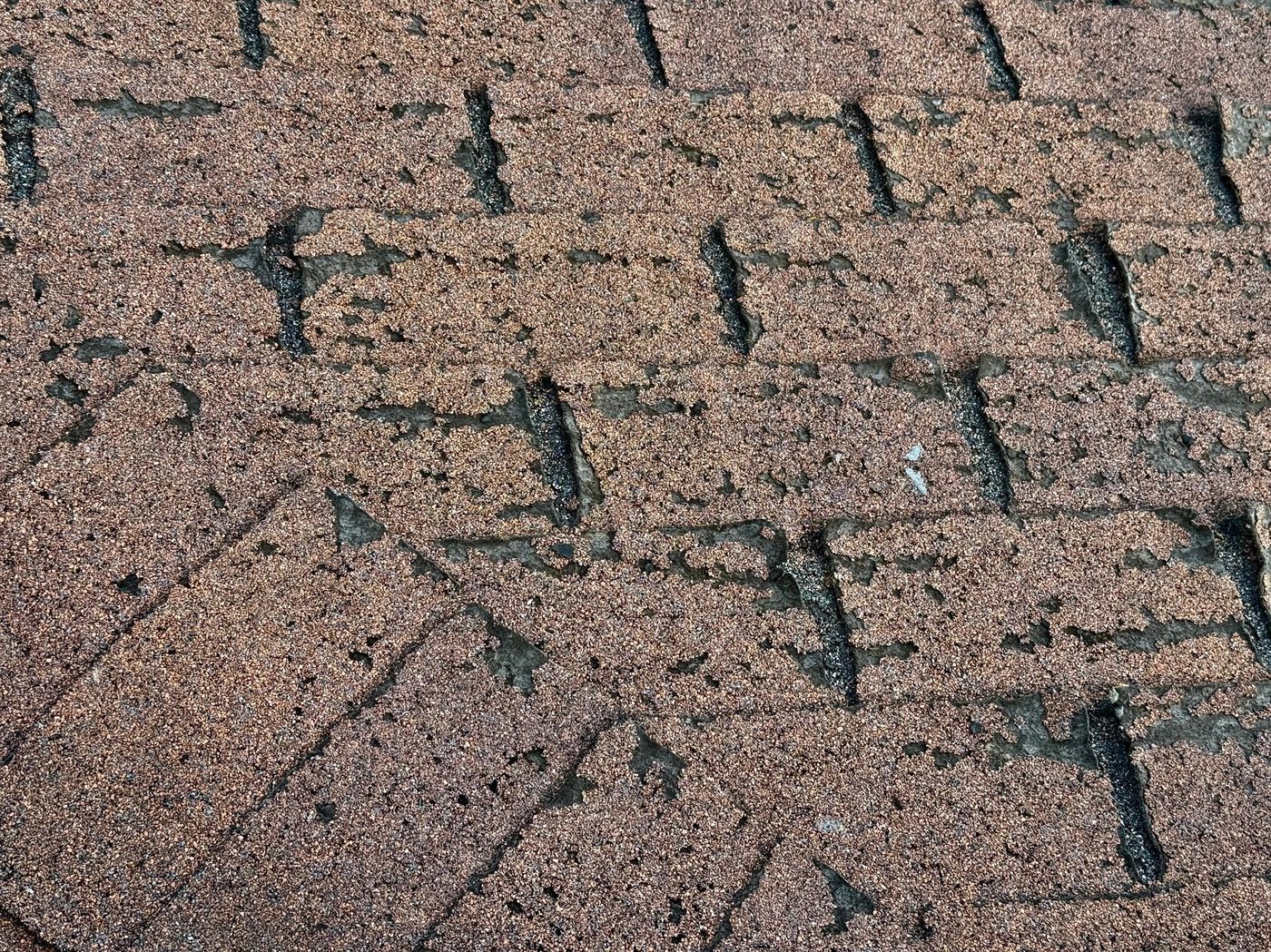
Hail-bruised shingle with granule loss, Watertown WI

How To

Spotting Hail Damage Without a Ladder

Six things you can check from your own yard in five minutes — and the one sign you cannot see without being on the roof.

The Six

Six Signs Of Hail Damage You Can Spot From The Ground

The signs of hail damage on a roof you can spot from the ground: dented gutters and downspouts, granules at the downspout outlets, dented vents and flashing, torn screens and cracked siding, flattened air-conditioner fins, and dents in a deck or fence. Two or three of the six means someone should walk the roof.

Not you. Hail-damaged shingles are more fragile than sound ones, granule loss makes them slick, and every year somebody falls off a ladder checking a roof a professional would have looked at for free. Everything below is done with your feet on the grass — and it matters this season rather than the year the leak appears, because the clock on a claim runs from the storm.

Checklist

Six Ground-Level Hail Damage Checks

Gutters and downspouts

Soft aluminum dents from hail that only bruises a shingle. Dimpled gutters mean the roof took the same hits, and hail damage on gutters and downspouts is the first thing an adjuster photographs.

Granules at the downspout outlets

A handful of coarse black grit where the water drains is shingle surface that is no longer protecting anything. Fresh loss after a storm looks like sand on the splash block.

Metal vents and flashing

Roof vents, caps and chimney flashing dent before shingles show anything. Binoculars from the lawn are enough to see it. The most reliable single tell.

Window screens and siding

Torn screens and cracked vinyl help establish the size and direction of the hail, and belong on the same claim as the roof.

Air conditioner fins

The condenser in your yard is a free hail gauge. Flattened fins mean it was hard hail, and the side that is flattened tells you which slopes faced it.

Decks and fences

Wood records impacts at eye level. Fresh light-colored dents in a gray deck board are hail marks, and a coin beside one gives the photograph scale.

Under The Surface

What Hail Actually Does To A Shingle

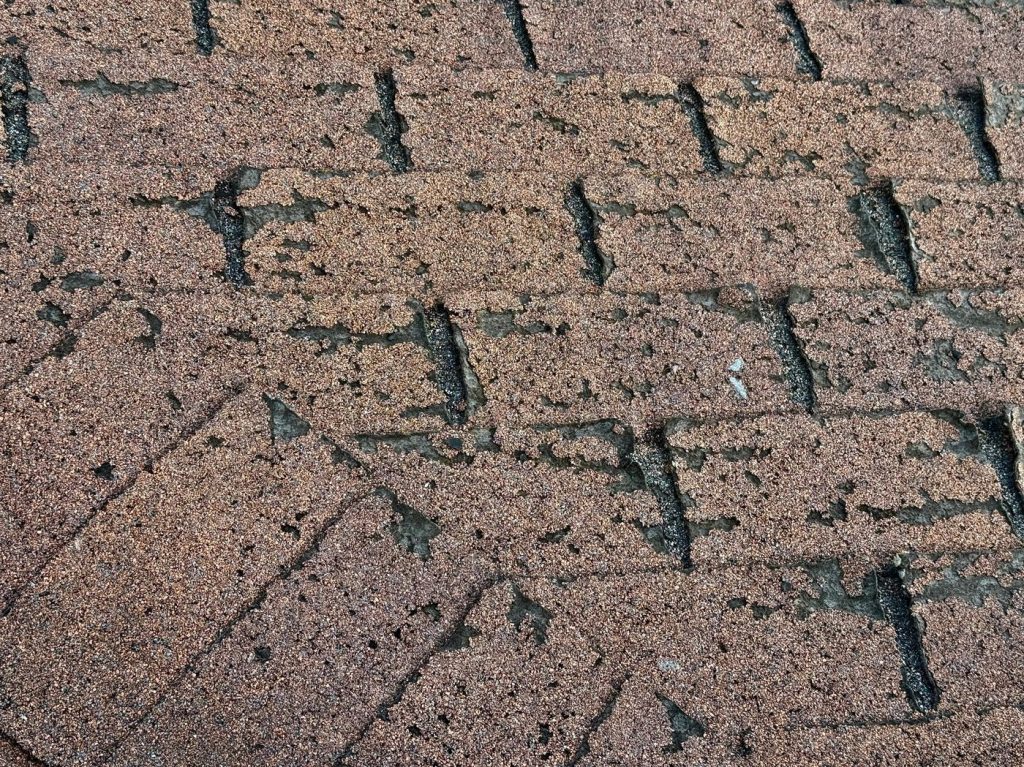
A hailstone hitting asphalt knocks the granules loose and bruises the fiberglass mat underneath. The granules are the shingle’s sunscreen; without them the asphalt oxidizes and cracks. The bruise is a soft spot you can feel with a thumb, often before you can see it, and under it the mat has fractured.

None of that leaks that day. What happens over the following winters is that the fractured mat opens a little further each freeze-thaw cycle, the bare asphalt around the impact weathers through, and water finds the nail below — usually five to eight years on. That is why a roof that “looks fine” after hail can be a total loss on an adjuster’s report, and why the hail damage page spends so long on the pattern rather than the leak.

Hail-bruised shingle with granule loss, Watertown WI

On Paper

How An Adjuster Reads A Roof

The test square

A ten-by-ten-foot square chalked on each slope, with every impact inside it circled and counted. Most carriers treat eight or more hits in a square as a damaged slope; the threshold is the insurer’s, so ask what theirs is.

The pattern across slopes

Hail rarely hits four slopes equally. Dense on the side that faced the storm, sparse on the lee — that pattern is what separates hail from wear in a report, and why every slope has to be walked.

Collateral damage

Your six ground checks, in the adjuster’s file. Dents on soft metals establish that hail of a damaging size fell at this address on this date, before anyone argues about a shingle.

The storm record

The date matters as much as the damage. The NOAA Storm Events Database carries every recorded hail report by county, and the storm record here has each one by town.

Storm History

What Has Fallen On Watertown

For scale: Watertown’s own hail record from the National Weather Service, newest first. Roughly one inch is where asphalt shingles start taking functional damage; the April 14, 2026 storm brought 2.75-inch stones.

31 recorded storms since 2005 · largest hail 2.75″ · strongest gust 75 mph · NOAA

  1. June 10, 2026

    Straight-line wind 60 mph

    An intense complex of thunderstorms tracked across most of southern Wisconsin, northern Illinois, and portions of northeast Wisconsin during the afternoon hours on June 10, 2026. Multiple measured wind gusts of 70+ MPH were reported as the storms moved across southern Wisconsin, resulting in widespread tree & power line damage. Several areas of structural damage…

    Full record →
  2. April 14, 2026

    Hail 2.75″ hail

    Numerous severe thunderstorms developed across southern Wisconsin during the afternoon and evening hours as a wave of low pressure moved across a stationary front over the region. Two main supercell thunderstorms developed along and north of Interstate 94 between Madison and Milwaukee, which produced softball sized hail and an EF-2 tornado. These storms would later…

    Full record →
  3. April 18, 2025

    Hail 1.25″ hail

    A cluster of severe thunderstorms with very large hail and heavy rain tracked along a warm front over southern WI during the morning. Numerous reports of very large hail were received, and also flash flooding in Milwaukee.

    Full record →
  4. April 15, 2023

    Hail 0.88″ hail

    An approaching weak low pressure area and cold front triggered scattered strong storms across southern WI. A couple reports of hail were received.

    Full record →
  5. June 13, 2022

    Hail 1.25″ hail

    A supercell thunderstorm formed north of a warm front and tracked east across much of southern WI. A swath of destructive hail and sporadic wind damage occurred. More specifically, vehicle, shingle, siding, gutter, and window screen damage. Short segments of tree damage also occurred. Three people drowned in Milwaukee when two men attempted to help…

    Full record →
  6. September 7, 2021

    Hail 1″ hail

    A broken line of thunderstorms along a cold front moved east to southeast across southern WI with numerous reports of large hail.

    Full record →

The Limit

What You Cannot Check, And Why It Matters

The damage that decides a claim is the bruising on the shingles themselves — a soft spot where the hail cracked the mat under the surface. You find it with a hand on the shingle, slope by slope, and it does not photograph from the ground or from a drone.

So the ground checks are a screening test, not a diagnosis. If two or three of the six are present, get someone up there — and get them up there before you call the insurer, so the claim is opened on what is actually on the roof. The first forty-eight hours sets out that order.

Straight Answers

Hail Damage Questions

Usually you cannot, and that is the problem: a bruised shingle keeps the water out for years. The attic is worth a look after a large storm — daylight through the sheathing or fresh water marks mean something was actually broken rather than bruised — but a dry attic proves nothing. The six checks outside and a free inspection on the roof are how the question gets answered.

Roughly one inch is where asphalt shingles start taking functional damage, though older and more brittle shingles bruise at less, and wind-driven hail at a shallow angle does more to one slope than to another. Anything that dents a gutter or flattens an air-conditioner fin is large enough to bruise a shingle. Watertown’s record above runs from 0.75-inch stones to the 2.75-inch hail of April 2026.

No. Hail bruising does not heal, and a dated inspection now is worth more than one in three years. The deadline that matters is statutory: Wis. Stat. § 631.83(1)(a) gives twelve months from the date of the loss to bring an action on the policy — for the April 14, 2026 storm, until April 14, 2027 — and your policy’s own reporting deadline is shorter. The deadline page explains both clocks.

Yes, next to a coin or a ruler, that day, before it melts. Your phone dates the picture, and a photograph of two-inch stones on your own lawn is the simplest possible answer to a later question about whether damaging hail fell at your address. Photograph the gutters, the screens and the air conditioner the same afternoon, and keep them with the claim.

It means the storm was large enough to have a record, and that it is worth ten minutes of somebody’s time on your roof. It does not mean your roof took the same damage: pitch, orientation and the age of the shingles changed what each roof caught, and the south and west slopes usually take it worst. Get the inspection; decide with the photographs in hand. The FAQ covers what happens if it finds nothing.

Related

Next Steps After Spotting Hail Damage

Hail damage repair

What hail does to a roof, what the inspection finds that you cannot, and when a partial is honest.

Hail damage

Free roof inspection

Every slope walked and photographed, a written verdict, and no obligation. The step after the six checks.

Book one

After a hail storm

The first forty-eight hours in the order that protects the house and the claim.

What to do first

Siding

Cracked vinyl on the windward wall is part of the same loss. Why it belongs on the same claim.

Siding

Free Inspection

Found Two Or Three Signs Of Hail Damage?

Free inspection. We walk every slope, photograph what we find, and you keep the report.

Nine Questions for the Roofer at Your Door

Buyer Beware

Nine Questions for the Roofer at Your Door

Nine questions that separate a local contractor from a crew that will be three states away by Christmas — and the two answers that should end the conversation.

The Situation

Storm-Chaser Roofing Companies: A Warning, And How To Vet The One At Your Door

How to vet the roofer who knocks after a storm: ask where the shop is, for the Wisconsin credential number, for insurance certificates, who does the work, what the warranty covers, whether the deductible goes on the contract, whether it carries the cancellation notice, whether they will negotiate your claim (they may not), and whether you can think about it.

After significant hail, Jefferson County fills up with out-of-state roofers inside forty-eight hours, door knocking street by street. Plenty do competent work. The structural problem is that a roof is a twenty-year product and they are a two-week presence, so the warranty they hand you is worth exactly their willingness to drive back. Wisconsin has noticed: Wis. Stat. § 100.65 was written for roofing after a storm, and two of the nine questions are simply asking whether the contractor has read it. We would ask them of us, too — the answers are on the about page.

Ask These

Nine Questions To Ask The Roofer At Your Door

Where is your shop?

An address you could drive to, in this county. Not a PO box and not “we’re working out of a hotel while we’re in the area”. Ours is on Main Street in Watertown.

What is your Wisconsin credential number?

Dwelling Contractor Certification. It should be on the contract, and it takes a minute to verify at the DSPS license lookup, which also shows how long it has been held.

Can I see your insurance certificates?

General liability and workers’ compensation, current, naming the company on your contract. If a worker is hurt on your roof uninsured, that can become your problem.

Who actually does the work?

Your crew or a subcontractor? Neither answer is wrong, but a company that will not answer is telling you something, and the warranty is only as good as whoever is accountable for the nailing.

What does the workmanship warranty cover, and for how long?

In writing, with the exclusions. “Lifetime” on labor from a company with no local address is not a real promise. What the two warranties each cover.

Will you put the deductible on the contract?

Anyone offering to waive or absorb it is offering something the state bans outright, with a $500 to $1,000 forfeiture per violation. Why that costs you, not them. Walk away.

Does your contract carry the cancellation notice?

Wisconsin requires every insurance-related roofing contract to state, in bold, your right to cancel within three business days of a claim denial. A contract without it is from someone who has not read the law that governs them.

Are you going to negotiate my claim?

The right answer is no, because a contractor may not. The statute allows them to inspect, estimate and discuss the damage with the adjuster; it forbids them to represent you. A roofer who promises to “handle the insurance” is promising something unlawful.

Can I have this quote and think about it?

The single most useful question. A legitimate contractor says yes. The reviews of the ones who said no are usually instructive.

Paperwork

Two Roofing Documents To Read Before You Sign

An assignment of benefits hands your claim to the contractor and can leave you with very little control over your own settlement. Read anything with that phrase in it extremely carefully; in Wisconsin the contractor is forbidden to negotiate the claim in any case, so an assignment is a document asking for something the law says they may not have.

A “work authorization” handed over on the doorstep is frequently a binding contract contingent on insurance approval. People sign them believing they are agreeing to an inspection. An inspection needs no signature; ours never has.

Straight Answers

Questions About Storm-Chaser Roofers

No. Some do decent work, and after a regional storm the local trade cannot cover every roof in the county in a season. The problem is structural rather than moral: a workmanship warranty is worth the years the company is still reachable, and a company that follows storms is by definition somewhere else next year. Ask the nine questions; the answers sort the good ones from the rest quickly. The storm damage page has the three-item version.

Find out what is not in it. The five usual omissions are the ice barrier the code requires at the eaves, new flashing rather than reused, decking priced per sheet, the permit where your town requires one, and disposal. Ask every quote to price those five by name and the gap generally explains itself. If the gap is the deductible — because they have “taken care of it” — see question six; that is a forfeiture, not a discount.

At the Wisconsin DSPS license lookup: search the business name and look for a Dwelling Contractor Certification, which every contractor pulling a permit on a house in this state needs, and the date it was first issued. A certification issued the month after the storm tells you when the company arrived. Madison’s own building inspection department tells homeowners to do the same check.

Yes, and we will give one. Send it to us and we will read it with you and say what it does and does not include — including when the answer is that theirs is fine and cheaper. We would rather lose a job to a good contractor than watch you sign with a bad one. The FAQ covers how quotes differ.

Related

Before You Sign A Roofing Contract

Your deductible

Why the offer to waive it is a forfeiture on the contractor and a fraud referral for you.

Deductibles

Storm damage repair

The whole storm process: tarp, document, file, adjuster, scope, work — and Watertown’s storm record.

Storm damage

About us

Where the shop is, who is on the crew, and how long we have been here. The answers to our own nine questions.

About

Reviews

What Watertown-area homeowners say about the work, with names and dates, linked to the original.

Reviews

No Charge

Want A Second Opinion On A Quote?

Send it to us. We will read it with you and tell you honestly what it does and does not include, even if the answer is that theirs is fine.

Ice Dams Are an Attic Problem

Winter

Ice Dams Are an Attic Problem

Why your house gets ice dams and your neighbor’s doesn’t: it is what is happening above your ceiling, not on your roof.

The Answer

Ice Dams In Southern Wisconsin: Why Your House Gets Them And Your Neighbor’s Doesn’t

Ice dams in southern Wisconsin form when heat leaking into the attic melts snow on the roof; the meltwater refreezes at the cold eave and backs up under the shingles. Your neighbor’s roof stays white because their attic is cold — sealed, insulated, ventilated at soffit and ridge. The roof is rarely the fault.

Everything below follows from that: why this part of the state gets them badly, what fixes one this winter, what prevents the next, and what the two houses on the same street are doing differently.

The Mechanism

An Ice Dam Is An Attic Problem

Heat leaking into your attic warms the roof deck and melts the snow lying on it. The meltwater runs down to the eaves, which are cold because there is no heated house underneath them, and refreezes. That ridge of ice then traps the next lot of meltwater, which backs up under the shingles and into your ceiling. The icicles on the gutters are the visible symptom; the dam behind them is the problem.

Notice what is not in that sequence: the roof doing anything wrong. Ice dams are an insulation and ventilation failure that presents as a roofing problem, which is why the ice dam page and the ventilation page are two halves of one answer.

Four Reasons

Why Southern Wisconsin Gets Them Badly

The freeze-thaw pattern

Our winters hover around freezing rather than staying hard-frozen, which is precisely the condition that melts snow by day and refreezes it by night.

The housing stock

Watertown’s median house is from 1969, built before attic air sealing was understood. Recessed lights and bath fans vent straight into the roof space.

Retrofitted insulation

Blown insulation added over unsealed penetrations slows heat without stopping it, and often blocks the soffit intake that would have kept the deck cold.

Roof geometry

North-facing valleys and roofs over porches or additions stay cold and shaded, so ice that forms there never leaves.

The Fix

What Actually Fixes An Ice Dam

This winter: steam removal. Low-pressure steam melts the dam without harming the shingles. Not hatchets, not ice picks and emphatically not a pressure washer, all of which we get called out to repair afterward.

Permanently: air-seal the attic floor first, then insulate, then make sure there is genuine cold-air intake at the soffits feeding exhaust at the ridge. Air sealing matters more than insulation depth, because insulation slows heat and air sealing stops it.

At the next replacement: ice barrier membrane at the eaves, so a future dam backs water onto a waterproof layer instead of into your plaster. The state code requires it only on roofs of 4:12 or less — SPS 321.28(4) — and we fit it on every pitch, because a Watertown eave ices up regardless. What else goes into a replacement.

Prevention

How To Prevent Ice Dams: The Order

Find the heat

Recessed lights, the attic hatch, bath fans venting into the attic, gaps around the chimney chase and plumbing stacks, missing insulation over the top plate. Usually several at once.

Seal it

Foam and caulk at every penetration; a gasketed hatch; bath fans ducted to a roof or wall cap with a damper. This step does more than any amount of insulation.

Insulate

Then, and only then, add depth — with baffles at the eaves so the new insulation cannot block the soffit intake it is supposed to sit behind.

Ventilate

Clear soffit intake, continuous ridge exhaust, sized to the ceiling area as SPS 322.39 requires and the ventilation page explains. Look at the roof after a snowfall: evenly white means it is working.

Straight Answers

Ice Dam Questions

Interior water damage from an ice dam is often covered as a sudden loss. Removing the ice, and fixing the attic that caused it, usually is not, because those are maintenance rather than damage. This varies more between policies than most coverage, so read yours, and photograph the dam and the interior stain before anything is removed. The claims section explains how to document a loss so it is paid.

Pulling the first few feet of snow off the eaves from the ground does genuinely help, because it removes the snow that would melt and refreeze at the coldest part of the roof, and it is safe. Do not get on a ladder to do it, and do not use the rake to hit ice that has already formed — that is how shingles get broken. A rake manages the symptom for one winter; the attic work above ends it.

They manage the symptom on a few awkward geometries — a north-facing valley over an unheated porch is the classic case. They are not a fix, they cost money to run all winter, and they should be the last option rather than the first. If a contractor proposes cables before asking about your attic, they have skipped the diagnosis. The ice dam page sets out the order the fixes go in.

Icicles are the symptom that shows from the street: meltwater running off a warm roof deck and freezing at the cold gutter. Big icicles mean a lot of melt, which means a lot of heat in the attic. The gutter itself is not the cause and cleaning it will not stop them — the gutter page explains what gutters actually protect — though a gutter full of ice is heavy enough to tear its hangers out of the fascia.

Please do not. Every winter someone takes a hammer to a dam, breaks the shingles underneath, and turns a seasonal nuisance into a spring replacement — and no policy covers damage the homeowner did with a hatchet. Falls off icy ladders are the bigger risk. If water is coming in tonight, move what you can, contain what you cannot, photograph everything, and call in the morning for steam. The FAQ covers what else gets blamed on the roof unfairly.

Related

Fixing Ice Dams, In Order

Ice dam removal

Steam removal now, then the attic work that stops it happening next January.

Ice dams

Attic ventilation

The permanent fix: intake and exhaust sized to the ceiling area, soffits actually open.

Ventilation

Roof replacement

Ice barrier at every eave whatever the pitch, as part of every roof we put on.

Replacement

Seamless gutters

What a gutter does and does not do about ice, and why a full one tears the fascia.

Gutters

Winter Work

Ice Backing Up Under Your Shingles?

We will steam it off, then tell you what in the attic caused it.

What a New Roof Costs Around Here

Cost Guide

What a New Roof Costs Around Here

A real number, from a source you can check, with the roof it was measured on. Then the six things that move it on your house.

The Answer

What A New Roof Costs In Watertown, WI

A roof replacement in Watertown, WI costs, by the 2025 Cost vs. Value benchmark, $29,253 for a 30-square asphalt roof in this region — about $975 a square — $35,865 in Madison and $31,184 in Milwaukee. Most Watertown houses are smaller, and a smaller roof costs more per square, not less.

That is the one figure on this page you can check against its source. Everything under it is what moves the number on your house, and how to read a quote that comes in at half the others.

Start With A Real Figure

The Roof Replacement Cost Benchmark, And Where It Comes From

The 2025 Cost vs. Value Report prices a full asphalt shingle replacement in the East North Central region — Wisconsin, Illinois, Michigan, Indiana, Ohio — at $29,253. For Madison specifically it is $35,865. For Milwaukee, $31,184.

Those are big numbers, and they are only useful because the report says exactly what it priced. Verbatim:

“Remove and dispose of existing roofing to bare wood sheathing. Install 30 squares of min. 235-lb. fiberglass asphalt shingles (min. 25-year warranty) with new 30-lb. felt (or equivalent synthetic) underlayment, galvanized drip edge, and mill-finish aluminum flashing. Assume a rectangular hip roof; custom flashing at two average-size skylights; and custom cap treatment at vented ridge.”

Thirty squares is 3,000 square feet of roof surface — a large house, hip roof, two skylights. Most of what we replace around Watertown is smaller than that.

The Benchmark

2025 Cost vs. Value Report — asphalt shingle roofing replacement, 30 squares
Market Job cost Resale value Recouped
East North Central$29,253$20,25269.2%
Madison, WI$35,865$20,43857.0%
Milwaukee, WI$31,184$19,66563.1%
National average$31,871$21,50167.5%
Source: 2025 Cost vs. Value Report, JLC / Zonda, published June 2025

Per Square

What That Works Out At Per Roofing Square

Divide the published job cost by the published 3,000 square feet and you get a per-square rate. That is a derived figure, not one the report publishes — worth saying, because plenty of sites present derived numbers as sourced ones.

East North Central lands at roughly $975 a square, or $9.75 a square foot. Madison at roughly $1,196 a square. Milwaukee at roughly $1,039.

One caveat that matters more than it looks: a smaller roof usually costs more per square, not less. Set-up, tear-off mobilization, dumpster rental and disposal minimums do not shrink with the roof. A tidy 18-square gable will not come in at three fifths of the 30-square figure.

Six Drivers

The Six Things That Move Your Roof Price

Roof area, not floor area

Measured on the plane of the roof. A 6:12 pitch has about 12% more surface than its footprint; a 12:12 has 41% more. This is the single biggest driver and the one people underestimate.

Pitch

Past roughly 6:12 the crew needs staging and harnesses and the day slows down. Past 9:12 it slows again. Same shingles, materially more labor.

Layers coming off

Two layers is roughly double the tear-off labor and double the disposal weight. And the state code forbids a third — if two are already on, the next roof is a tear-off whether you like it or not.

Cut-up versus simple

Valleys, dormers, skylights, chimneys and pipe penetrations are all flashing details, and flashing is where labor and leaks both live. Two roofs of identical area can differ by a third.

Decking

Nobody can see the sheathing through the old shingles. Any honest estimate prices decking replacement per sheet up front, so a surprise is a known unit cost rather than an open-ended extra.

Materials

Architectural shingles over three-tab, synthetic underlayment over felt, ice barrier beyond what the code requires, upgraded ridge vent. Real differences, and each one should be a line you can see.

Compare Properly

The Five Line Items That Explain A Cheap Quote

When one quote comes in dramatically under the others it is almost never because that contractor found efficiencies. It is because something is not in it. Ask all three to price these five explicitly and the mystery usually evaporates.

1. Ice barrier. SPS 321.28(4) requires it on roofs of 4:12 or less, running at least 30 inches up the slope and 12 inches past the inner face of the exterior wall. On steeper roofs the code does not require it and we fit it anyway. Ask whether it is in there and how far up it goes.

2. New flashing rather than reusing the old. Reused flashing is the most common cause of a leak on a brand new roof. The state code sets the minimums — valley metal at least No. 28 gauge and 16 inches wide, a cricket on any chimney over 30 inches wide on its upper side — and the replacement page quotes the section.

3. Decking replacement, priced per sheet, in writing, before anybody is on the roof.

4. Permit where your municipality requires one. Watertown, Beaver Dam, Waterloo and Columbus do not. Madison, Sun Prairie, Fort Atkinson, Cottage Grove and Wisconsin Dells do — Cottage Grove publishes $65. Which applies to you.

5. Disposal and clean-up, including the magnet run. A 30-square tear-off is several tons of material. It is never free and somebody is paying for it.

Resale

Is A New Roof Worth Doing Before You Sell?

This is the figure most people actually want and rarely get. The same report tracks what a replacement returns at resale: 69.2% recouped in this region, better than the 67.5% national average. In Madison it drops to 57.0%, and Milwaukee sits at 63.1%.

Read it honestly: a new roof is not an investment that pays for itself. It is a repair that recovers about two thirds of its cost and removes an objection that would otherwise come off the offer anyway. If the roof is failing, a buyer will price it — and they will price it worse than you can.

Metal is a different calculation entirely: $47,473 in this region against $21,812 back, or 45.9% recouped. Metal is a fifty-year decision made for reasons other than resale.

Straight Answers

Cost Questions

For a benchmark, the 2025 Cost vs. Value Report puts a 30-square asphalt replacement in this region at $29,253 — which works out to about $975 a square. Most Watertown houses are smaller than the roof they priced, and a smaller roof costs more per square rather than less, because set-up and disposal minimums do not shrink.

Your number moves on six things: roof area on the plane rather than the footprint, pitch, how many layers come off, how cut up it is, how much decking needs replacing, and what goes on it. We measure, we walk it, and then you get a fixed written figure with all five of the usual omissions itemized.

Because nobody can see your sheathing through your shingles, and because roof area is not floor area. What we can do over the phone is tell you the benchmark above, tell you which end of it your house is likely to sit at from the age and the style, and book a free half hour to make it exact.

Almost always one of five things: ice barrier, new flashing, decking priced per sheet, the permit where one is required, and disposal. Ask every quote to price those five explicitly. The gap usually turns out to be the difference between them.

No. We will read a competitor’s quote with you and tell you honestly what is and is not in it, and sometimes the answer is that theirs is fine and cheaper.

It is priced per sheet in your estimate before we start, so a surprise underneath is a known unit cost rather than an open-ended extra. Ask any contractor for that number in writing; a refusal tells you something.

Usually yes, up to a point, because mobilization, set-up and the dumpster are fixed. That is also why the industry benchmark above — measured on a 30-square roof — understates the per-square rate on a small simple house.

Related

From The Benchmark To Your Roof

Roof replacement

What a full tear-off includes, section by section of the state code, and the six things that move the price.

Replacement

Financing

Payment options for a roof that failed at an inconvenient moment, and the deductible rule that is not a payment option.

Financing

Free roof inspection

The measurement and the look at the decking that turn a benchmark into your number.

Book one

The FAQ

Cost, timing, permits, insurance and warranties, answered plainly on one page.

FAQ

Free Inspection

Want The Exact Number For Your Roof?

Half an hour, every slope walked and photographed, and a written figure with the five usual omissions itemized. Free, and yours whether or not you hire us.

The April 2026 Hailstorm: What It Did To Our Roofs

Storm Record

The April 2026 Hailstorm: What It Did To Our Roofs

Four days in April. Hail to 2.75 inches on Watertown and four inches east of Madison, 81 mph winds, and tornadoes in four counties. What the record shows, and what it means for your roof now.

The Storm

The April 2026 Hail Storm In Wisconsin: What Fell, Where, And What It Means For Your Roof

The April 2026 hail storm in Wisconsin ran 13–April 17: 2.75-inch hail on Watertown on the 14th, four inches at Burke east of Madison, 81 mph at Waterloo, tornadoes in four counties. Any roof under it has bruising that will not show inside for years, and the statutory clock under § 631.83 runs to April 2027.

Below: the week day by day, the two storm records with every report in the Weather Service’s words, Watertown’s own timeline, and what to do about a roof that has not been looked at since.

April 13–17, 2026

What The April 2026 Storms Brought, Day By Day

The season had already opened. On April 2, 2026 two-inch hail fell at Whitewater. But the week that mattered began late on Monday April 13, when a line of storms came across after midnight with straight-line wind rather than hail: 81 mph at Waterloo and at Cambridge in Jefferson County, 81 mph again at DeForest, East Bristol and the Madison airport, 75 mph at Fox Lake and Rubicon in Dodge County. A brief tornado touched down south of Beaver Dam and went through a garage; another crossed from Dane County into Jefferson at Busseyville. Half the roof came off a church at East Bristol. A hundred-year-old barn collapsed at Albion.

Tuesday April 14 was the hail. In Watertown the Weather Service logged stones of an inch, an inch and a quarter and an inch and three quarters inside the city, 1.75 inches at Grellton just south, and 2.75 inches southeast of town at the airport — the largest ever recorded here. Waterloo and Lake Mills took an inch. Across Dane County it was worse: four inches at Burke, east of Maple Bluff, three and a half at North Madison, 3.25 at Maple Bluff, 2.75 at Monona, at the Truax airport and west of Cottage Grove, two and a half in Cottage Grove itself, two inches at Sun Prairie, Marshall, Middleton and Cross Plains. In Waukesha County, 81 mph wind and inch hail at Oconomowoc Lake and two-inch hail at Menomonee Falls.

It did not stop there. A tornado hit Delavan Lake on the 15th, and on the 17th four more went through Walworth County — Richmond, Darien, Delavan and Lyons — with another at Muskego Lake and a barn wall blown down at Richwood in Dodge County.

All of it is public. Every figure above is in the NOAA Storm Events Database, which anyone can query by county and date, and the Weather Service published its own event review of the week.

From The Record

The Two Storm Records

April 14, 2026 — the hail

Ninety-two reports across five counties, from an inch to four. Every one of them, in the Weather Service’s words, with the towns it touched and the claim deadline computed from the date.

Read the record

April 13, 2026 — the wind

The overnight line that opened the week: 81 mph gusts, two tornadoes, and the structural damage that goes with them, county by county.

Read the record

Storm History

What Watertown Itself Has Taken

The city’s own storm record, newest first. April 2026 sits at the top of it by some distance.

31 recorded storms since 2005 · largest hail 2.75″ · strongest gust 75 mph · NOAA

  1. June 10, 2026

    Straight-line wind 60 mph

    An intense complex of thunderstorms tracked across most of southern Wisconsin, northern Illinois, and portions of northeast Wisconsin during the afternoon hours on June 10, 2026. Multiple measured wind gusts of 70+ MPH were reported as the storms moved across southern Wisconsin, resulting in widespread tree & power line damage. Several areas of structural damage…

    Full record →
  2. April 14, 2026

    Hail 2.75″ hail

    Numerous severe thunderstorms developed across southern Wisconsin during the afternoon and evening hours as a wave of low pressure moved across a stationary front over the region. Two main supercell thunderstorms developed along and north of Interstate 94 between Madison and Milwaukee, which produced softball sized hail and an EF-2 tornado. These storms would later…

    Full record →
  3. April 18, 2025

    Hail 1.25″ hail

    A cluster of severe thunderstorms with very large hail and heavy rain tracked along a warm front over southern WI during the morning. Numerous reports of very large hail were received, and also flash flooding in Milwaukee.

    Full record →
  4. April 15, 2023

    Hail 0.88″ hail

    An approaching weak low pressure area and cold front triggered scattered strong storms across southern WI. A couple reports of hail were received.

    Full record →
  5. June 13, 2022

    Hail 1.25″ hail

    A supercell thunderstorm formed north of a warm front and tracked east across much of southern WI. A swath of destructive hail and sporadic wind damage occurred. More specifically, vehicle, shingle, siding, gutter, and window screen damage. Short segments of tree damage also occurred. Three people drowned in Milwaukee when two men attempted to help…

    Full record →
  6. September 7, 2021

    Hail 1″ hail

    A broken line of thunderstorms along a cold front moved east to southeast across southern WI with numerous reports of large hail.

    Full record →

Your deadline, in dates. Twelve months from April 14, 2026 is April 14, 2027 — the statutory limit on bringing an action against your insurer for this storm under Wis. Stat. § 631.83(1)(a), counted from the day the hail fell, not the day you noticed. Your policy’s deadline to report a claim is a separate and usually shorter term; the deadline page has both clocks side by side.

Hail Does Not Leak

Why The April Hail Still Matters In September

Hail damage does not leak. That is what makes it a financial problem rather than a practical one. A stone of an inch and three quarters bruises the mat under the granules on the slopes that faced it — south and west, for this storm — and the roof looks fine from the driveway. The granules keep shedding from the bruise, the mat is exposed, and the roof fails eight or ten years before it should, long after anyone can be billed for it.

The inspection is how you find out. Half an hour, every slope walked and photographed, and a dated written report. If there is nothing, the report says so and you keep it. If there is bruising, the report is the document your claim rests on, and its date is the one that matters against a deadline.

A roof that was under both this storm and the one in 2025 has taken two seasons of damage and has one live window. That is the roof to have looked at first.

What To Do

If Your Roof Was Under It

Book the inspection

Free, half an hour, dated. It is the document everything else depends on, and you keep it whether or not you hire anyone.

Photograph the tells

Dented gutters, downspouts and vents. Granules where the downspouts drain. Torn screens. Flattened fins on the air conditioner. All visible from the ground, and all dated by your phone.

Call your insurer before any contractor

Report first. A contractor who says otherwise wants to be in the room before your adjuster is, and Wisconsin law says we cannot negotiate your claim for you in any case.

Check who knocked

A storm brings crews from out of state. The DSPS license lookup tells you in a minute whether the name on the truck holds a Wisconsin Dwelling Contractor Certification, and for how long.

April 18, 2025

And The Hail The Year Before

Watertown was hit in April 2025 as well. On April 18, 2025 hail of an inch and a quarter fell at the Watertown airport and an inch north-west of town, with the worst of that storm further south — two inches at Cold Spring, 1.75 at Milford, Busseyville and Palmyra. Twelve months from that date ran to April 2026, so its statutory window has closed. The damage it did has not gone anywhere, and a report that documents both storms on one roof is worth having when the 2026 claim is assessed.

Straight Answers

Questions About This Storm

If you are in Watertown, Waterloo, Lake Mills, Oconomowoc, Madison, Sun Prairie or Cottage Grove, the Weather Service logged hail of an inch or more within a mile or two of you on April 14, 2026. The storm record lists every report with its location, and the free inspection settles what actually landed on your roof.

No. The statutory limit on bringing an action for this storm is twelve months from April 14, 2026 — that is April 14, 2027, under Wis. Stat. § 631.83(1)(a). Your policy’s own reporting deadline is separate and usually shorter, so report to your insurer now rather than later.

Possibly, and that is the problem. Hail bruises the shingle mat without opening it; the leak comes years later. The only way to know is to have the slopes that faced the storm walked and photographed, which is what the inspection is.

Not on the doorstep. Check the name at the DSPS license lookup, ask where their shop is, and know that under Wis. Stat. § 100.65 a contractor may not offer to pay or rebate your deductible, and must give you written notice of your right to cancel if your insurer denies the claim.

Every report the Weather Service logged for that episode, in their words, sorted largest first; the towns it touched; the largest hail, strongest gust and tornado count; and the claim deadline computed from the storm’s date. It is built from the NOAA database and updated as they publish.

Related

Roofing Services After The April Storm

Hail damage repair

What 2.75-inch hail does to a shingle, the ground-level tells, and what the inspection finds that you cannot.

Hail damage

Storm damage repair

The claim sequence from tarp to final invoice, and Watertown’s storm record newest first.

Storm damage

After a hail storm

The first forty-eight hours in the order that protects the house and the claim.

What to do first

Siding

Hail that bruised the roof cracked the siding on the same elevation. Why both belong on one claim.

Siding

Free Inspection

Was Your Roof Under The April Storm?

Half an hour, every slope photographed, a dated report you keep. Free, and it is the document a claim rests on.

Hello world!

Welcome to WordPress. This is your first post. Edit or delete it, then start writing!